


TL;DR: Campus is alive again, Ag Week is in full swing, and CAS is leaning into what comes next. We’re honoring Dr. John K. Matsushima at ARDEC, strengthening partnerships, investing in infrastructure, launching three Democracy in Agriculture fellows, improving how the college works internally, and reminding ourselves that the hardest agricultural problems will take teams—not silos—to solve.
There is nothing quite like the energy of campus when the students are back.
The sidewalks fill up. Classrooms come alive. There are students sitting under trees, hurrying to labs, finding their people, trying something new, and occasionally looking like they have absolutely no idea where they are going. That part may be a permanent feature of the first few weeks.
And then there is Ag Week.
One of my favorite things about this time of year is getting out across campus and taking part in the activities that remind us agriculture is not just something we study. It is something we experience together. We can compete, laugh, eat, play games, meet people we would not otherwise know, and learn something along the way.
That matters.
Education should absolutely involve buckling down. Our students are here to master difficult material, develop judgment, learn to work with people who think differently than they do, and prepare themselves for careers that will ask a great deal of them. But learning does not have to be grim to be serious. Some of the best learning happens when curiosity, community, and a little fun collide.
The same is true of our work as a college.
Agriculture gives us no shortage of complicated problems. Water is becoming less predictable and more contested. Productive land is increasingly affected by urban growth. Markets, technologies, climate, public expectations, and the ways people understand science are all changing at once. None of these challenges fits neatly inside a single discipline.
And increasingly, neither does agriculture.
The whole university does work that matters to agriculture. Engineers, economists, veterinarians, data scientists, social scientists, communicators, natural-resource experts, public-health researchers and many others have knowledge agriculture needs. Our job is not to claim every piece of that work as ours. Our job is to understand agricultural problems deeply enough to bring the right people together to solve them.
That requires teams. It requires curiosity beyond our own fields. And it requires us to keep building connections.
We are doing some of that internally right now. We are searching for a new Associate Dean for Extension who will help strengthen coordination between the CAS and Extension and make it easier to connect our research, teaching, and engagement with communities across Colorado.
We also expect soon to begin a search for a new Executive Director of Development. Development at its best is not simply fundraising. It’s partnership building: understanding the work our faculty, staff and students are trying to accomplish and connecting that work with people and organizations who care enough about the outcome to invest in it.
That idea of connection also sits at the heart of our growing Democracy Project.
This year, we selected not one but three Distinguished Fellows for Democracy in Agriculture, each approaching the relationship between agriculture, public decision-making and civil discourse from a different direction.
- Lauren Chenarides is examining trust, evidence and public decisions by talking with Colorado decision-makers and mapping where agricultural and food-system evidence is trusted, where it is not, and where important information may simply be missing from the conversation.
- Marco Costanigro is focusing on civil discourse through economic reasoning, including work connected to our Certificate in Agricultural Policy and Civic Leadership and a proposed K–14 curriculum initiative designed to help students learn how to wrestle productively with difficult food and agricultural questions.
- Jennifer Martin is focused on getting agriculture more deliberately into the policymaking conversation, including plans for a gubernatorial agriculture debate and legislative education opportunities that can help policymakers engage more deeply with the realities of agriculture.
I’m excited about these projects because democracy, like agriculture, gets harder when the issues get more complicated. Water scarcity is not only a hydrology problem. Urban encroachment is not only a land-use problem. Public disagreement about food systems, conservation, technology or environmental tradeoffs is not simply a communications problem.
These are problems that require science, context, judgment and people willing to stay at the table with one another.
That is increasingly the work before us.
So yes, I am enjoying the games and celebrations of Ag Week. I am enjoying seeing students back on campus. I am enjoying the noise, the activity and the unmistakable sense that another academic year is underway.
But underneath all of that energy is something more important: thousands of people learning how to do difficult things together – and having fun while they do it.
The world keeps evolving.
Agriculture has to evolve with it.
And that means our college must keep doing what we’re uniquely primed to keep doing: learning, questioning, convening, experimenting, building partnerships, and preparing people to take on problems that none of us can solve alone.
The world needs ag. Ag needs everyone. Come to the table.
Happy Ag Week, friends!
Carolyn
HIGHLIGHT: Honoring Dr. John K. Matsushima at ARDEC
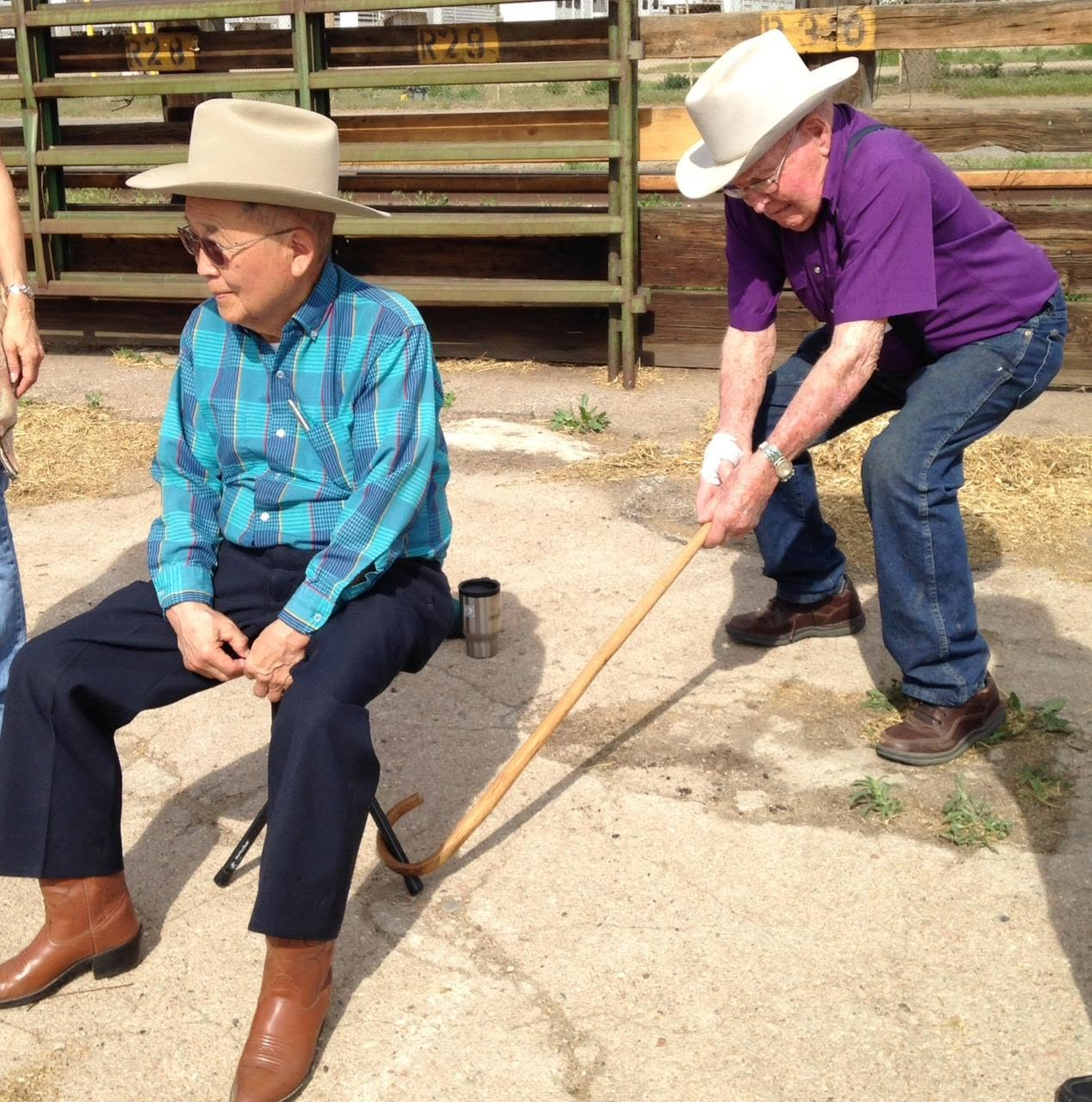
This Friday, as part of the Animal Sciences Fall Gather, we will dedicate the Dr. John K. Matsushima Livestock Teaching and Research Complex at ARDEC. Dr. Matsushima helped shape modern beef cattle nutrition and management through a career built around the idea that rigorous science should improve the way animals are raised, producers make decisions, and students learn. His work connected discovery with practice, and that same spirit is easy to see in the work our animal scientists continue to do at ARDEC today: research that is scientifically strong, grounded in real production systems, and connected directly to teaching and the needs of Colorado agriculture.
The dedication is also just the beginning of what is happening at ARDEC. We are making the livestock complex more functional, more integrated, and better able to support the teaching and research our faculty and students are already doing there. At the same time, we are raising our game with improved infrastructure that will expand what is possible for animal science, agricultural research, and hands-on education. The combination of legacy, people, place, and new investment is pretty phenomenal—and it is exactly the kind of momentum we want to build on.
AROUND THE COLLEGE: Showing Federal Partners Agriculture in Action
We’re also busy this week hosting a federal agricultural appropriations delegation and giving them a firsthand look at the breadth of agricultural work happening across CSU and with our USDA colleagues. Visits like this matter because the strongest case for investment is not made in the abstract—it is made by showing people the science, facilities, students, faculty, partnerships, and real-world problems behind the budget lines. From genetic resources and crops to livestock, food systems, water, and emerging agricultural technologies, we have an opportunity to show how federal investment translates into impact for Colorado and the nation.
And just as important, this is about relationships. Much of the work that matters most in agriculture depends on long-term partnerships with USDA and other federal agencies. Hosting congressional staff on campus gives us a chance to listen, explain where the opportunities are, and help connect national priorities with the expertise already here. That is part of our job too: making sure the people shaping agricultural policy and investment understand what is possible when they invest in our work and the infrastructure needed to keep leading.
COMING AND GOING: Supporting Research, Graduate Education, and Operations
Amy Charkowski has been appointed Dean of the Faculty of Land and Food Systems at the University of British Columbia, and we are excited for her as she steps into this new leadership role. Her transition also gives us an opportunity to rethink how we support research and graduate education across the college.
Rather than refilling the Associate Dean for Research and Graduate Education position as it existed before, we are separating those responsibilities so we can be more intentional about each. Gene Kelly will support the college’s research portfolio in his new role as Interim Associate Dean for Research, while we work now on the best structure for supporting graduate education across CAS.
At the same time, Troy Bauder is expanding his role to support operations and facilities not only for AES, but also for our on-campus facilities—helping us think more comprehensively about the spaces, infrastructure, and systems that make our work possible. Julie Lenoch, in her role as Chief of Staff, will partner across all of these areas to support coordination and help make sure the structure around research, graduate education, facilities, and operations works as effectively as possible.
YOU SAID, WE DID
You said: The college’s travel processes were too cumbersome, inconsistent, and time-consuming.
We did: We took a hard look at how travel moves through the college and made changes to simplify the process, clarify expectations, and reduce unnecessary friction for faculty and staff.
Why it matters: Administrative systems should support the work, not become the work. When we can remove barriers from routine processes, people get time back for teaching, research, Extension, students, and partnerships.
Food for Thought brings together the stories that shape the College of Agricultural Sciences. From science and technology to education and culture, our faculty, students, and staff are making a difference everywhere you look.
Join me this summer and fall to ask questions, share ideas, or simply connect. These are come-and-go office hours — stop by the Nutrien building anytime during the session. For one-on-one conversations, contact Shannon Wagner to schedule. The next Dean’s Office Hours are Thursday, September 17, from 4 to 5 p.m.