


Welcome to Food for Thought
This week in our Food for Thought roundup, we’re learning about tarantula trafficking, the historic Black agricultural community where CSU Extension agents helped the community establish farming practices, the treats pumpkins can provide to your compost bin, and how food insecurity is greatest in the areas where food production is highest. We’re also celebrating the student team who was not only the only collegiate team at the Retired Racehorse Project Thoroughbred Makeover, but that also won against professional equestrian trainers.
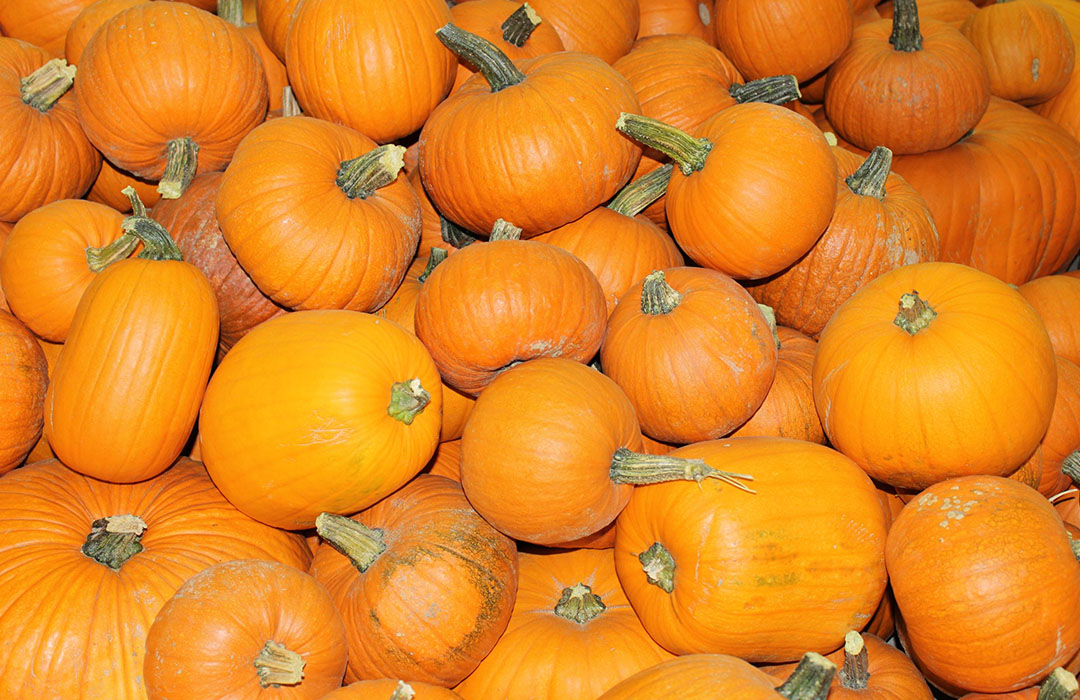
The scary truth about the afterlife of Halloween pumpkins – and what to do with them instead
Turns out, pumpkins can be both a trick and a treat for the planet. With one billion discarded annually in the U.S., they can also be a treat for both your compost pile and the local economy. According to Addy Elliott, senior instructor in the Department of Soil and Crop Sciences, there are between 200 and 400 farms that produce pumpkins in Colorado. Pumpkins also contribute nitrogen, phosphorus, potassium, water, and organic matter to soil. “…all of those pieces of the pumpkin separately are useful and collectively they can be helpful to make a compost pile,” she says.
Tarantulas, trafficking and tourism: Exploring the illicit wildlife trade
The tarantula walkabout in Southern Colorado attracts tourists to the region annually to witness the mating migration of the male Oklahoma brown tarantula. But habitat loss, drought and climate change are contributing to a troubling decline in their populations. In a recent episode of CSU’s The Audit podcast, CAS entomologist Maia Holmes joined College of Business supply chain researchers John Macdonald and Rowan Hilend to explore the intersection of wildlife tourism, conservation and the illegal wildlife trade.
“Tarantulas also often get trafficked because the laws around them can be obscure…also, it’s a lot easier to move a tarantula than it is to move say, a rhinoceros,” she says.
At site of Dearfield, a bygone Black community, restoration moves forward in Weld County
Dearfield, located about 25 miles east of Greeley, was an early 20th Century predominantly Black agricultural community listed on the National Register of Historic Places. October 3 was the 18th annual Dearfield Day, a volunteer workday and educational opportunity. Established in 1910, CSU extension agents helped Dearfield farmers with their farming practices, highlighting CSU’s land-grant mission.
“It’s part of a rich, historical narrative and it’s relevant to agricultural science and agriculture in general…that is one reason Dearfield is so critical. The narrative is relevant to the College of Agricultural Sciences and reflects a long history with county agents,” says Elias Quiñonez, CAS Manager of Student Life.
CSU students earn national title at Thoroughbred Makeover
Earlier this month, students from the CSU Thoroughbred Retraining Club claimed first place in the Show Jumping championship and second in Eventing at the Retired Racehorse Project Thoroughbred Makeover, one of the nation’s premier competitions for retraining retired racehorses. The competition took place in Lexington, Kentucky.
The students were not only the only university with a dedicated collegiate team who competed, but they also competed against professional trainers and established equestrian businesses.
“Winning a division and placing second in another against professional competition is an extraordinary accomplishment and a testament to the talent, dedication and expertise of our students,” said Carleigh Fedorka, associate professor of equine sciences and faculty adviser for the club.
Addressing hunger in America’s heartland
Although the majority of America’s food supply is produced in rural areas, according to Feeding America, 86% of U.S. counties with the highest food insecurity rates are rural.
“In rural areas, access to food is challenging for a number of reasons ranging from distance to grocery stores, financial constraints, transportation challenges, and more limited food away from home options,” writes Dawn Thilmany in an article for Forbes.
To address the challenge, companies like Amazon are partnering with organizations like No Kid Hungry, by leveraging their rural delivery network to help get nutritious food to the families that need it, no matter their location.
2026 Fall Ramfunder Cohort
It’s Ramfunder season! As part of CSU’s fall crowdfunding effort, the College of Agricultural Sciences is proud to feature 13 campaigns led by our students, faculty, and staff. These campaigns support a variety of initiatives, including student experiences, innovative research, hands-on learning, and community engagement. From funding our Soil and Crop Science students at the National Soil Judging Contest to our Seedstock Merchandising team, to the new Matsushima Livestock Teaching Complex, there’s something for everyone. Explore the campaigns below and make a gift to the projects that inspire you.
- CSU National Collegiate Soil Judging Contest
- CSU Horse Judging Team
- 2027 CSU Student Education Gardens
- 2026 CSU Agronomy Club
- Modernizing the Gillette Museum’s Aquatic Insect Collection
- The Montana Moth Project
- CSU Polo Team
- Temple Grandin Equine Center Safety Equipment
- Seedstock Merchandising Team
- Ram Scholars
- 2026 Animal Science Peer Mentors Connection Club
- Matsushima Livestock Research and Teaching Complex
- Greenhouse AgCam for Poinsettias
Applause, upcoming events, and announcements 🎉
- Mark your calendar for October 21 for a Soil and Crop Sciences Seminar with faculty investigator Alex Harkess of HudsonAlpha Institute for Biotechnology.
- Ellen M. Rankins and Caitlin Peters of the Temple Grandin Equine Center are listed as co-authors on a new cross-disciplinary paper, Effects of Incorporating Horses into Occupational Therapy on Adrenocortical and Sympathetic Nervous System Reactivity and Regulation in Autistic Children: A Randomized Controlled Trial, published in Journal of Autism and Developmental Disorders.
- Join Dean Carolyn Lawrence-Dill for Dean’s Office Hours, an opportunity to ask questions, share ideas, or simply connect. The next will be held on Friday, October 30 from 9 -10 a.m., and Wednesday, November 11 from 4 to 5 p.m. See the CAS calendar for more information.
- Join Associate Dean Kellie Enns for a CAS/AES Town Hall on Wednesday, October 28. The Town Hall will focus on updates about faculty and student success, priorities, and future plans. Kellie will share remarks, then open the floor for questions and discussion. The Town Hall runs from 4 to 6 p.m. in the Knowledge Well (Nutrien 140).
Have a story to share?
Submit it here, or subscribe to Food for Thought on LinkedIn!
Add your event to the CAS Calendar to be included in Food for Thought!