


Not so long ago, Syria produced all of the food it needed within its own borders. And a big part of that production was potatoes.
Now, you may not immediately associate potato growing with any Middle Eastern country. But since potatoes were first introduced by the British in the mid-1800s, potatoes have become an important part of Syrian agriculture and cuisine.
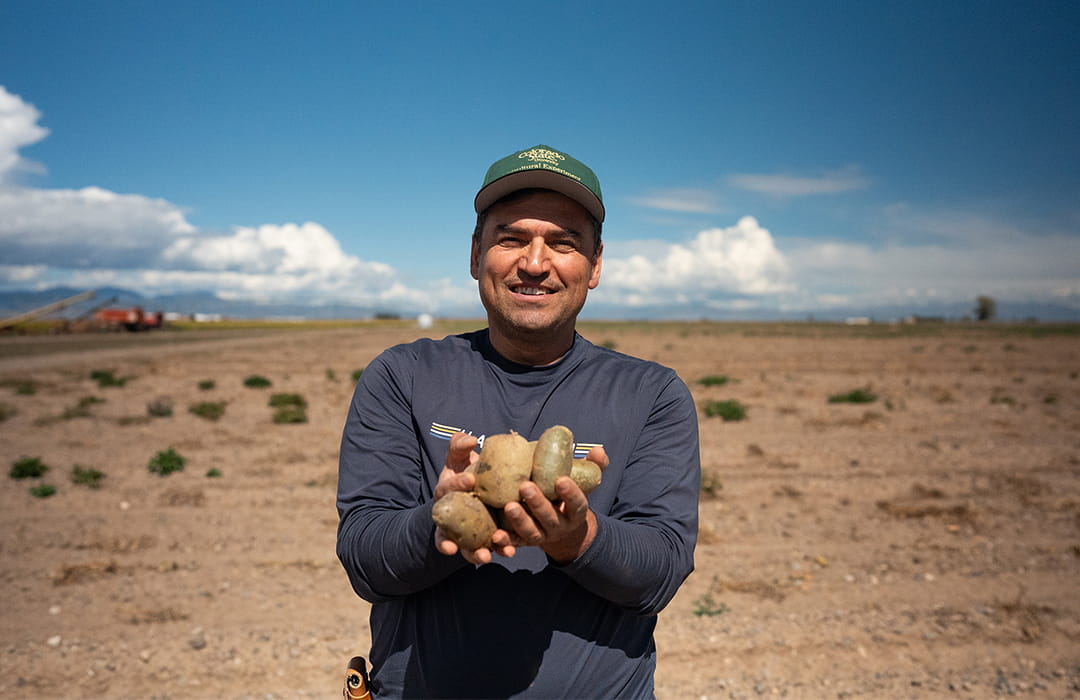
“Potatoes grow very well in Syria,” said Mohamad Chikh-Ali, an associate professor and extension specialist with Colorado State University’s College of Agricultural Sciences. “The soil near Aleppo, which is near where I grew up, is red in color and the quality is very good, which makes for delicious potatoes. They are cooked in many ways and new cuisine is always being developed. And potatoes are an excellent cash crop for farmers.”
Chikh-Ali didn’t grow up on a farm but he took an early interest in agriculture as a means to help people in a country where agriculture is the major contributor to the GDP. He earned his bachelor’s degree in horticulture in Aleppo, then went to work for a government establishment that imports seed potatoes from Europe and sells them to growers nationwide. That’s when he was first introduced to the potato industry and its importance to Syria.
“In general, Syria is a big agricultural country,” he said. “We used to produce all of our own food; I don’t remember having anything imported when I was a kid. People in Syria love potatoes, and I told myself that I should go work in this industry to help producing our own seed potatoes and feed more people.”
The big challenge with growing potatoes, whether in Syria or in the San Luis Valley in Southern Colorado, is crop-related diseases. Even though Syria loves its potatoes and is well-suited for growing them, the country hasn’t kept up with the study of potato diseases which hindered the production of healthy seed potatoes.


