


Alfalfa mosaic virus (AMV) in peppers
Overview and disease transmission
Alfalfa mosaic virus is an RNA virus that only infects plants and requires living plant cells to replicate. Transmission occurs primarily by aphids, although it is also possible for AMV to be transmitted mechanically (e.g., use of tools that came in contact with infected plants) as well as through seed. Alfalfa mosaic virus is a non-persistently transmitted virus, meaning that aphids can acquire the virus within minutes of feeding from an infected host and quickly spread it to uninfected plants. Aphids need to only poke or probe plant tissue with their mouthparts to infect a host, and prolonged feeding is not required.
The main reservoir for AMV in Colorado is alfalfa (Medicago sativa L.), and infection risk is highest for pepper plants adjacent to alfalfa fields. In our field research and observations thus far, alfalfa harvest triggers aphids to move to neighboring and adjacent crops, such as peppers, allowing transmission of the virus. Alfalfa mosaic virus overwinters in alfalfa or is propagated the next season through seed transmission, although seed transmission rate is relatively low.

Alfalfa mosaic virus on pepper. This virus is spread by aphids and has become common on pepper in Colorado. Image credit: Taylor Janecek, Colorado State University

Example of fruit discoloration from AMV. Image credit: Taylor Janecek, Colorado State University
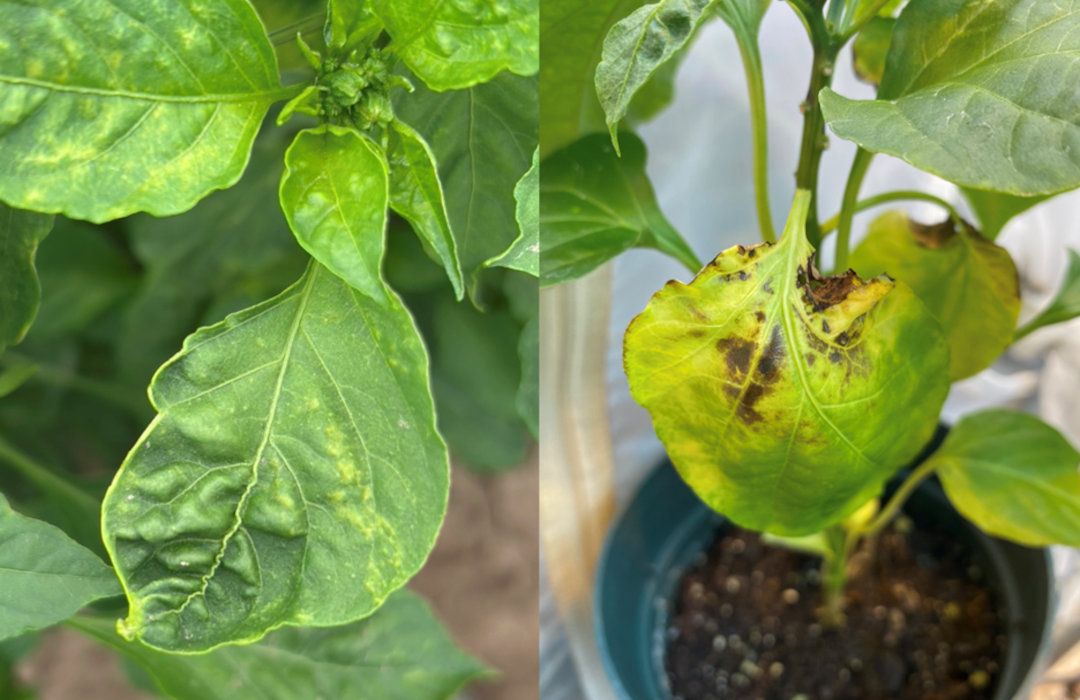
Examples of leaf vein deformation (left) and leaf discoloration (right) on AMV-infected peppers. Image credit: Lara Amiri-Kazaz, Colorado State University
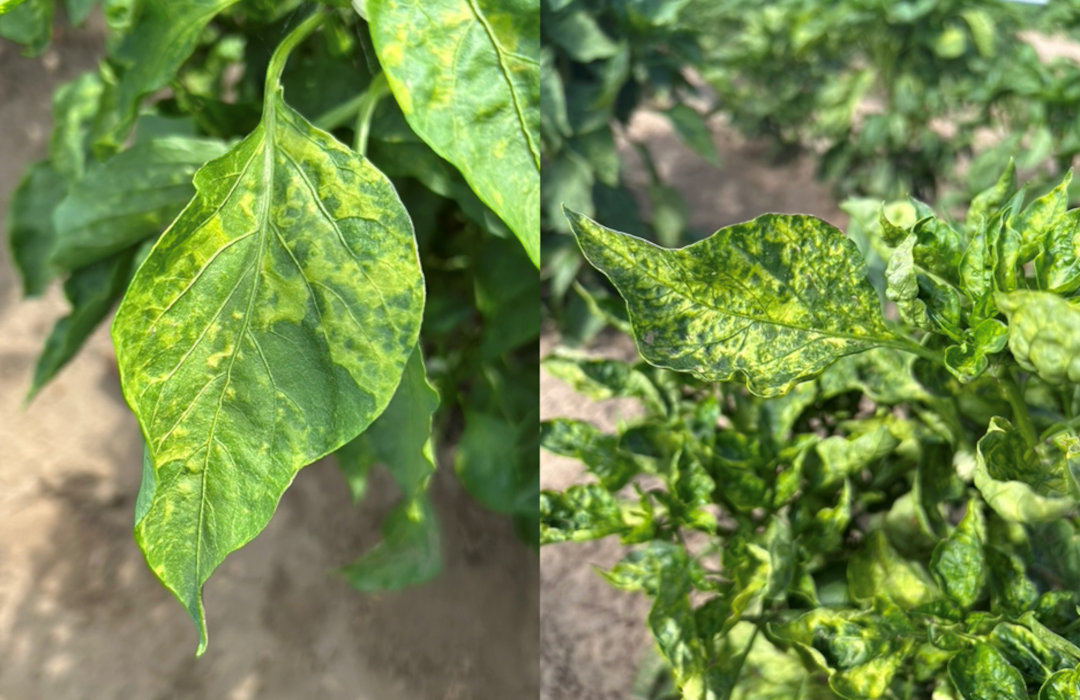
Examples of mosaic chlorosis (blotchy yellowing) on AMV- infected peppers. Image credit: Lara Amiri-Kazaz, Colorado State University
Quick Facts
- Alfalfa mosaic virus (AMV) is a globally distributed pathogen that infects over 600 plant species and poses a significant threat to chile pepper production in Colorado.
- Aphids are the primary vectors of AMV, with at least 25 species known to transmit the virus.
- Symptoms of AMV in peppers include yellow mosaic patterns on leaves and fruit, deformed veins, leaf curling, and stunted growth of leaves, stems, and fruit.
- Economic impact is severe, with yield and quality losses ranging from 50–75%, resulting in annual revenue losses of $5.6–8.4 million across Colorado’s 1,000 acres of chile pepper production.
- The link between plant tolerance and yield is variable, and AMV continues to be a major challenge for growers.
- Planting resistant cultivars is currently the most effective strategy for managing AMV.
Disease symptoms
The most common AMV symptoms in peppers are mosaic chlorosis (blotchy yellowing) and leaf vein deformations. These symptoms are typically observed on the upper part of the plant on the younger leaves. Over time, the leaf discoloration will appear whitish or bleached. Rarer symptoms of AMV include leaf necrosis, which appears as black splotches between the veins of the leaves. The fruits of plants may also have symptoms, which appear as blotchiness or mottling, circular discoloration, or dark sunken marks. Infected plants may also be stunted in growth. Highly symptomatic plants will have multiple types of leaf symptoms. AMV symptoms usually appear at the top of the plant within a few weeks after pepper transplants are planted in the field, but symptoms may appear on any part of the plant and at any time during the season. Depending on the cultivar, some peppers may recover from AMV symptoms, but the virus can remain in the plant for the duration of the growing season. AMV symptoms and their severity can differ among pepper cultivars.
Other viruses, such as cucumber mosaic virus or tobacco mosaic virus, can produce similar symptoms in plants. If it is necessary to confirm virus identity, leaf or fruit samples should be sent to the Colorado State University Plant Diagnostic Clinic.

Example of fruit deformation and discoloration with pockmarks from AMV. Image credit: Carlo Vaughn, Colorado State University
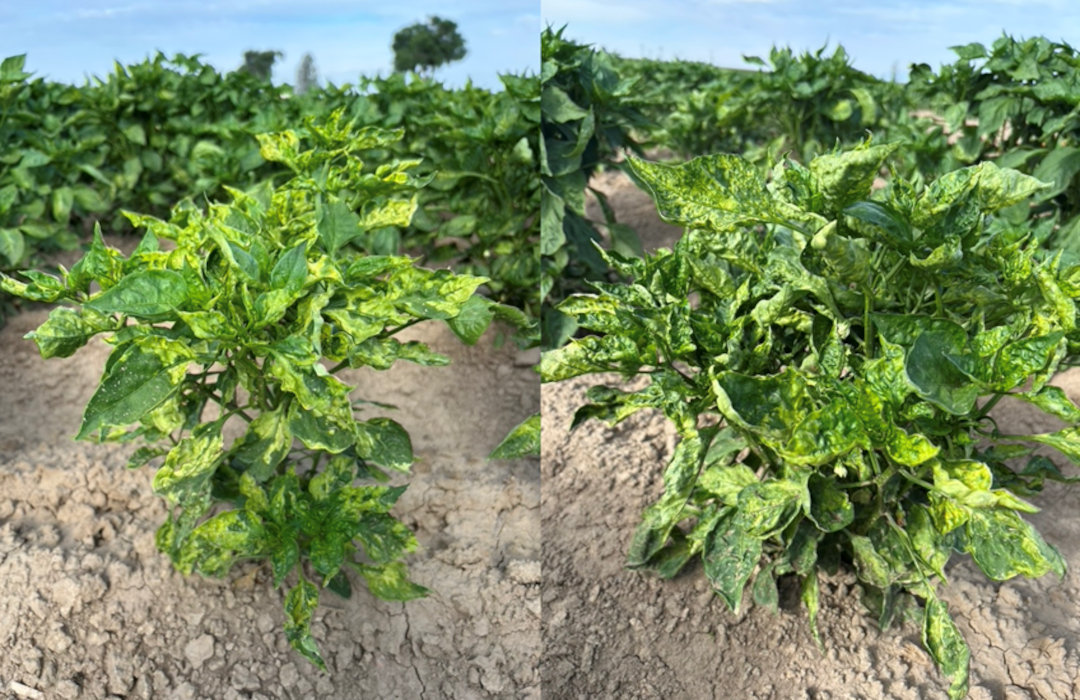
Examples of peppers with severe AMV symptoms in the field. Image credit: Lara Amiri-Kazaz, Colorado State University
Disease and vector management
Although aphids are the primary vectors of AMV, they do not typically colonize or feed extensively on pepper plants. However, AMV can be transmitted through brief probing of leaf tissue, meaning even minimal aphid contact can result in infection. This makes the virus particularly difficult to manage. Insecticides are generally ineffective, as aphids do not remain on the plant long enough for either contact or systemic treatments to work.
Despite these challenges, several strategies can help reduce AMV infection rates. Cultural and sanitation practices play a key role in reducing AMV spread. Planting tolerant or resistant pepper cultivars remains one of the most effective strategies for managing AMV. Adjusting planting dates can also influence disease outcomes: while early planting may result in higher infection rates, the extended growing season can help offset yield losses. In contrast, late planting tends to reduce virus incidence and severity, though it may also lead to lower overall yields. Additionally, virus-symptomatic transplants should be removed from greenhouses and excluded from field planting to prevent early-season infection. Reused pots or stakes should be thoroughly sanitized before planting a new crop. Further, preliminary research indicates that planting peppers some distance away from alfalfa can decrease incidence and severity of symptoms. Early studies suggest that peppers growing ~100 m away from alfalfa (~328 ft) experience reduced disease pressure. The use of barrier crops can also decrease aphid movement and contribute to lower prevalence of AMV. Barrier crops such as corn create a physical obstruction while other crops such as peas that are hosts of both AMV and many vector species can act as a trap for the virus and vector. Moreover, if vectors colonize the trap crop, farmers can then effectively use chemical control measures to reduce vector numbers.
As aphids are the primary vectors of AMV, altering their behavior can reduce disease incidence as well. Tactics such as straw mulch and reflective plastic may help interfere with aphids settling on the plants and transmitting the virus. Promising but less-tested strategies include implementing augmentative biocontrol with generalist predators to suppress aphid populations. The presence of aphid predators can induce predator-avoidant behavior, such as dropping from a plant or avoiding it altogether. Laboratory studies show that several aphid predators, such as minute pirate bugs and ladybird beetles, have this effect on aphids. Preliminary results from a field experiment support this strategy, as the introduction of commercially available minute pirate bugs reduced disease prevalence and symptom severity in peppers.
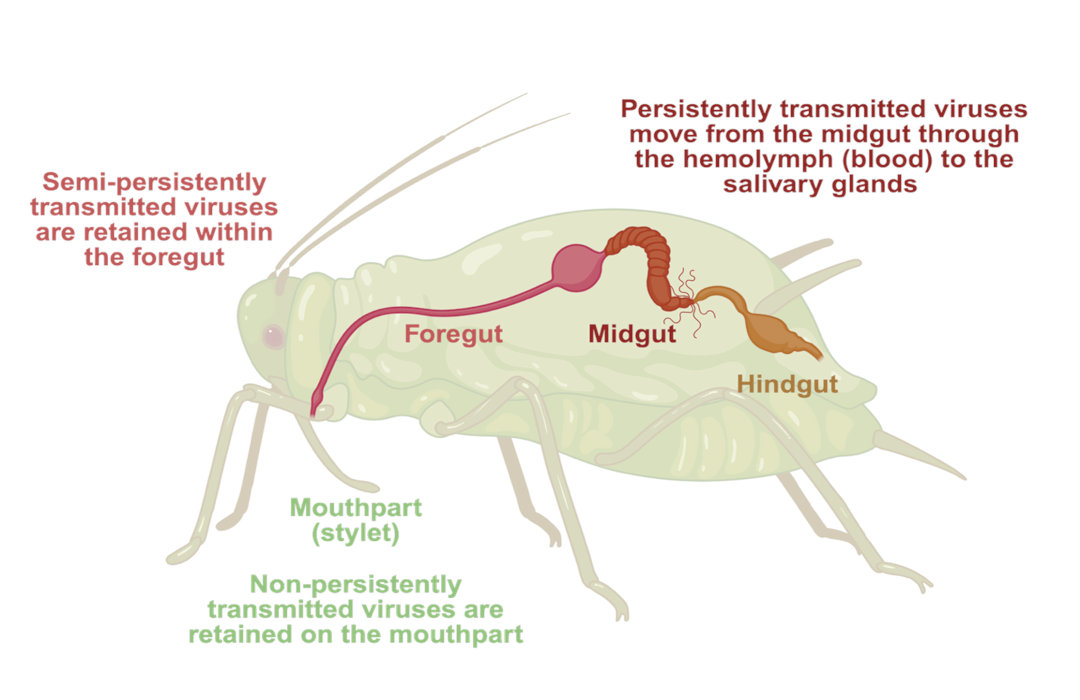
Non-persistently transmitted viruses like AMV are retained only on an aphid’s mouthparts, enabling transmission from an infected to a healthy plant within minutes. Image credit: Lara Amiri-Kazaz, Colorado State University, Created with BioRender.com
References
Ahoonmanesh, A., Hajimorad, M.R., Ingham, B.J., Francki. R. I. B. 1990. Indirect double antibody sandwich ELISA for detecting alfalfa mosaic virus in aphids after short probes on infected plants. Journal of Virological Methods. 30: 271–281
Albrect, T., Bartolo, M., Cranshaw, W.S., Nachappa, P. 2020. Old virus new host: defining the disease cycle of Alfalfa mosaic virus in peppers. Phytopathology (11) 12:7
Amiri-Kazaz, L. M., Pastrana, A. M., Daugovish, O., and Szczepaniec A. 2025. Alfalfa mosaic virus in chile peppers: status, management prospects, and research needs. Journal of Integrated Pest Management, 16(1): 1-6.
Gao Y, Fan G, Cheng S, et al. 2022. Evolutionary history and global spatiotemporal pattern of alfalfa mosaic virus. Front. Microbiol. 13:1051834. https://doi.org/10.3389/fmicb.2022.1051834
Jones, R. A. C. 2013. Virus diseases of perennial pasture legumes in Australia: incidences, losses, epidemiology, and management. Crop Pasture Sci. 64: 199.