


Welcome to Food for Thought
In this week’s Food for Thought roundup, we cover what warm weather could mean for Palisade peaches, Dr. Cotrufo’s Distinguished Professor honor, Ag Day at the Capitol, and what our experts have to say about what record-high temperatures and low snowpack mean for farmers and ranchers this summer.
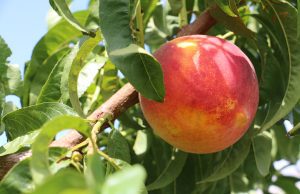
Early peach bloom puts crop at risk
Peaches are big business in Palisade, and recent warm temperatures exceeding 80 degrees in the Grand Valley have triggered fruit trees to bloom three weeks earlier than normal. While the near-term weather forecast might look good, it could lead to crop loss if temperatures drop. Read More
“The lethal temperature of the buds starts to rise to warmer and warmer temperatures as they de-acclimate…Basically, from bloom on they’re quite susceptible to frost risk at 26 degrees,” says David Sterle, a research scientist at the Colorado State University Western Colorado Research Center-Orchard Mesa. “…we’re not out of the woods until the middle of May,” he added. Read More
Francesca Cotrufo named University Distinguished Professor
Dr. Francesca Cotrufo has been named a Colorado State University Distinguished Professor, the highest academic honor for tenured CSU faculty. A globally recognized expert in soil organic matter, she conducted a 2013 study on above- and below-ground decomposition that changed how researchers understand the carbon cycle. Her methods are used by research labs worldwide to analyze carbon storage and nutrient availability. Her accomplishments include co-founding the CSU Soil Carbon Solutions Center; she is an AGU Fellow and a five-time Clarivate Highly Cited Researcher. She will be honored at the Celebrate! Colorado State Provost Awards ceremony on April 22. Congratulations, Dr. Cotrufo! Read More
Four natural ways to kill weeds—and keep them from coming back
As summer makes its entrance, so do weeds, which compete and overtake grass and other plants for resources. Bindweed is an example, which produces over 500 seeds per plant annually and can lie dormant for up to 60 years. Amy Lentz, instructor in the Department of Horticulture and Landscape Architecture, suggests mowing more frequently and hand weeding when weeds are young to remove root systems and prevent the weeds from flowering and spreading seeds.
“It is important to try and get as much of the root system as possible when pulling and digging weeds,” Lentz says. Read More
Governor Polis celebrates agriculture day, signs new laws strengthening agricultural support
On March 24, the College of Ag celebrated Colorado Ag Day alongside Governor Jared Polis and our industry partners at the State Capitol. The Agricultural Water Quality Program, Agricultural Biology, AgNext, Irrigation Innovation Consortium, and Western Colorado Research Center represented CSU. Lawmakers enjoyed lunch provided by Ram Country Meats and Ag Council students spent the day advocating for the future of ag. Governor Polis also signed two ag-related bills: Modify Colorado Agricultural Future Loan Program (SB26-064) and Diseased Livestock Indemnity Fund (HB26-1067). Read More
World Water Day
In honor of World Water day on March 22, our March storytelling highlighted the work we do in the college to advance water related research in ag and protect our most precious resource.
Grim outlook: Colorado faces limited water supply after record-low snowpack
This year’s snow drought and record-high temperatures (Fort Collins had a record high of 91°F in March) are setting the scene for a very difficult season for farmers. “The impacts of drought are wide-ranging and include economic and agricultural repercussions. Farmers and ranchers may face lower crop yields and higher costs of feeding livestock…drought years also tend to be years with more and larger wildfires,” writes Russ Schumacher with the Colorado Climate Center.
“The chances of getting back into the range of average have dwindled away, and if the weather pattern doesn’t turn around in April, we may be headed for uncharted territory for Colorado water,” he says. Read More
As alfalfa drains the Colorado River, alternative feed is crop sought
Alfalfa and grass hays used for cattle feed use as much as 46% of the water from the Colorado River, and as water becomes an increasingly hot topic, it’s likely not sustainable. At the Western Colorado Research Center – Grand Valley Agricultural Experiment Station in Fruita, Colorado, Perry Cabot and his team are researching alternative forage crops like sainfoin and Kernza, which can help farmers and ranchers survive drought, reduce pressure on rivers, and even improve health and methane emissions. Kernza also offers additional market options, including beer, cereals, and other grain-based foods. Read More
Workforce pipeline: Colorado Water Center trains future water leaders as workforce dries up
One-third of the U.S. water workforce is preparing to retire, and The Colorado Water Center at CSU is working to fill the gap through programs like the Colorado Water Fellows, which introduces students from all majors to water topics. Two CAS students in the program were featured in SOURCE: Joselin Rodriguez Garay, Civil Engineering and Soil and Crop Sciences, and Rachel Holle, Environmental and Natural Resource Economics.
“I was looking for a way that I could go into a career that included both water and agriculture because they sustain us…I chose civil engineering for the more technical side of things, but I still wanted to learn more about how agriculture feeds the world,” says Rodriguez Garay of her double major. Read More
Water in Ag Video Series
With the help of our friends in Barnfly Productions, we spoke with four of our water experts in the college and how their disciplines apply to agricultural water use. View the playlist
- Chris Goemans, Associate Professor, Department of Agricultural and Resource Economics
- Amy Kremen, Associate Director, Irrigation Innovation Consortium, Department of Soil and Crop Sciences
- AJ Brown, Agricultural Data Scientist, Ag Water Quality Program
- Lori Catalano, Associate Professor, Department of Horticulture and Landscape Architecture
Applause, Upcoming Events, and Announcements 🎉
- Katie Greenwood, a two-time CSU AgRam (she earned her bachelor’s and master’s degrees in agricultural education) has been named executive director of the Colorado FFA Foundation. Congratulations, Katie!
- Commencement is coming up! CSU’s Commencement ceremony will be May 16 and two CAS recognition ceremonies are on the 15th. If you’re interested in volunteering, please email Megan Kapp.
- Mark your Calendar for Friday, July 10: The CSU Rodeo Team will compete at the Learfield Collegiate All-Star Rodeo, set to debut during Bulls & Beats, the Professional Bull Riders’ (PBR) season-opening event at Canvas Stadium July 10-12.
- Paige Stanley, a research scientist with the Soil Innovation Lab, has been recognized with the Outstanding Young Professional Award by the Society for Range Management. Congratulations, Paige!
- Kim Stackhouse-Lawson, professor of animal science and director of AgNext, received the 2026 Trailblazer Award from the Denver Business Journal as part of its annual Leaders in Agriculture program for advancing sustainable, data-driven solutions in animal agriculture through AgNext.