


Welcome to Food for Thought
This week in our Food for Thought roundup, we’re excited to welcome our students back. Our researchers are sharing insights about peaches, wine, and chocolate. You’ll also find out how mountain hayfields work as huge water filters and how native plants can fit into any garden. Plus, we’re celebrating the achievements of our students, staff, and professors, including internships, new papers, and scholarships.
Mountain hayfields can filter nutrients and support clean water
A CSU Agricultural Water Quality Program study in the Yampa, Gunnison and Colorado River basins found that irrigated mountain hayfields work like large filters, removing sediment, fertilizer, excess nitrogen and phosphorus, and other pollutants from runoff.
Erik Wardle, the program’s director, explained, “These irrigated ag lands in the mountains are essentially large grass filter strips.” Researchers found that, in some cases, runoff water quality was even better than the water initially used for irrigation. The data provides producers and state agencies with valuable baseline measurements and demonstrates that best management practices can effectively reduce nutrient impacts in mountain meadow hay systems.
A lasting legacy: CSU community reflects on contributions, history amid 150th anniversary of statehood
Since its founding as Colorado Agricultural College, CSU has helped address some of agriculture’s biggest challenges. Today, CSU AgNext is advancing sustainable animal agriculture research. Program director Kim Stackhouse-Lawson says the program “can be a really powerful space for people to get curious and really do some incredible work.”
AgNext gives students hands-on research experience. For Morgan Nicklaus, a third-year animal science student, that was a key reason for choosing CSU. “That was super important to me — to know that I’ll be able to get my hands dirty…the experiences you get outside the classroom room is what’s influential,” she says.
Technology helping to predict perfect peach picking time
The peach you see on the grocery store shelf underwent a delicate dance to arrive at the right time. Ioannis Minas, an associate professor of pomology, helps growers optimize harvests through his company, XLSOR. The technology predicts ripening up to a month in advance, with some growers saying the predictions are accurate down to the day. For the past two years, CSU Extension interns in Palisade have tested the technology and gained hands-on experience while helping local growers
Gardening: Nurturing Colorado’s nature at your doorstep
Planting native species adapted to Colorado’s dry climate helps conserve water, boost property values, attract pollinators, and support local biodiversity. And you don’t have to abandon your garden style or design — native gardening boasts a realm of creative possibilities for gardens of all shapes and sizes.
“I love to point out to people that you can have whatever garden style you want but can just substitute in native plants. It’s like art. It’s simply the medium you use…you just have to start — with one plant,” says Jennifer Bousselot, associate professor in the Department of Horticulture and Landscape Architecture.
Lambs from ewes fed a poor-quality diet with realimentation exhibit increased incidence of hypothermia and divergent pre-weaning growth
Research from Caitlin Cadaret’s lab in the Department of Animal Sciences found that moderate nutritional restriction during pregnancy can have lasting effects on lamb health and growth, even if the mother’s diet improves later in gestation. While a poor maternal diet did not result in obvious differences at birth, such as weight or body measurements, lambs born to nutrient-restricted ewes had more difficulty maintaining body temperature, grew more slowly, and exhibited altered body proportions compared with lambs born to well-fed mothers. Co-authors on the paper include Rachael Stucke, Alison Kuderka, Ellen Roberts, Ryne Haggard, Alejandro Quevedo, and Terry Engle.
Palisade Uncorks a Colorado Wine Destination
Palisade — famous for its peaches — is becoming a destination for wine. “With abundant sunshine, wide day-to-night temperature swings and minimal rainfall, our drier conditions come together to create ideal growing conditions,” says Horst Caspari, state viticulturist and professor in the Department of Horticulture and Landscape Architecture.
At the Western Colorado Research Center, Caspari studies bud hardiness, irrigation, and other factors that support local growers. He also manages North America’s largest vineyard agrivoltaics installation, researching how to balance solar energy production with vineyard performance. The work will help growers improve both energy generation and crop outcomes.
How scientists are perfecting chocolate
Nearly 180 years after chocolate was first mass-produced in bar form, researchers are still uncovering the science behind the perfect bite. Studies are examining how microbes influence flavor during cocoa bean fermentation, how cocoa butter crystals create chocolate’s signature snap and shine, and why white “bloom” develops during storage. At CSU Spur’s Food Innovation Center, food scientist Caitlin Clark studies chocolate science and explains that chocolate is “incredibly complex,” with researchers continuing to unlock the chemistry behind one of the world’s favorite treats.
Balanced Stewardship of the Land to Save the Prairie
In an article about sustainable agriculture and conservation practices at Fox Ranch in eastern Colorado, Sara Place, feedlot systems specialist with CSU AgNext, offers an important perspective on the role cattle can play in protecting prairie ecosystems.
While feedlot-finished beef often has a lower greenhouse gas footprint per pound due, Place points out that the overall situation is more complicated. She says “keeping grass in grass and root side down is the most important thing to consider.”
The insight shows that it is possible to preserve grasslands for future generations through a balance of environmental stewardship and economic viability.
Applause, upcoming events, and announcements
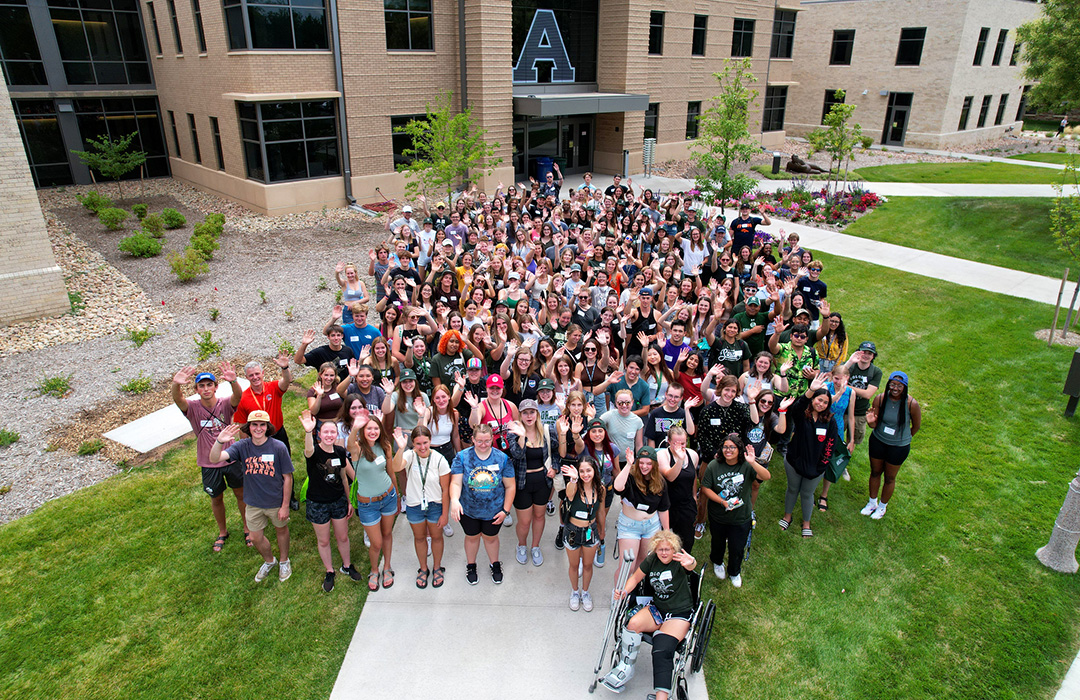
- Welcome back students! Classes begin today, and over 6,000 students moved into residence halls last week.
- Researchers from the Departments of Soil and Crop Sciences and Horticulture and Landscape Architecture — Arsen Yerlan, Laura Mason, Quitterie Perromat, Valerie Seitz, Kelly Wrighton, Jessica Prenni and Meagan Schipanski — have coauthored a paper, Cover crop effects on the soil microbiome and microbially mediated soil functions, published in Discover Agriculture.
- Be a part of a 100-year-old tradition on Saturday, August 29 — Paint the A! Learn more about volunteering here.
-
The Together We Grow Connect Conference is the primary engine for cross-sector innovation in the food and agriculture workforce and will be held from September 8-10. Register here!
-
The Colorado Wheat Research Foundation will market a new variety, Jim Quick, under its PlainsGold brand. It’s named after Jim Quick, the CSU Wheat Breeder from 1980 to 1998. He released 12 varieties during his tenure.
-
The Joan Gaynor Kuder Scholarship gives two scholarships of $2,345 each to full-time CSU employees. This year, one of the recipients is Karmen Lillard, a research associate at the Western Colorado Research Center who is working toward an undergraduate degree in soil and crop sciences.
-
This week, the CSU Crops Testing Program invites growers, agricultural professionals, industry representatives, and community members to attend a series of field days taking place across Eastern Colorado, providing opportunities to view current research trials, discuss crop management practices, and learn about the latest developments in corn, sorghum, proso millet and dry bean production. The field days are free and open to the public, no registration needed. Learn more here!
-
Save the Date: CSU’s 45th annual Ag Day will take place on Saturday, Sept. 12. The Nutrien Ag Day BBQ will be from 12-4 p.m. before the Rams take on Southern Utah at 5 p.m. Get tickets and sign up to volunteer.
-
Animal Sciences Professor Temple Grandin is up for induction into the Cattle Feeders Hall of Fame. Voting closes at the end of the month — don’t miss your chance to Cast your vote to recognize her decades of impact advancing animal welfare, livestock handling and industry standards.