


Emerald Ash Borer




We are proud to have received funding from the Western Integrated Pest Management Center (project CO020) to support a Regional Education and IPM Implementation Program focused on managing emerald ash borer in urban landscapes. This website provides up-to-date information relevant to the states involved in our project, with contributions from collaborators at Oregon State University, Utah State University, Montana State University, and the University of Wyoming.
Important resources
General information on emerald ash borer (EAB)
Emerald ash borer in the west: what to know
How to identify emerald ash borer and symptoms of infestation
What to do if you suspect emerald ash borer
Management and treatment options
WIPM grant collaborator resources
Helpful websites and publications
Please visit the emerald ash borer webpage for information on the pest description, life history, and management.
Emerald ash borer in the west: what to know
The emerald ash borer (EAB) is a highly destructive, invasive beetle that targets ash trees. Since its first detection in Michigan in 2002, EAB has spread rapidly across North America, killing tens of millions of ash trees in forests, urban landscapes, and residential areas.
Ash trees are valued in the western United States for their drought tolerance, shade, and ecological benefits. Unfortunately, EAB poses a serious threat to these trees. Larvae tunnel beneath the bark, disrupting the tree’s ability to transport water and nutrients. Without intervention, infested trees typically die within 3 to 5 years.
Why it matters
The consequences of EAB infestation are far-reaching:
- Economic impact: tree removal, replacement, and treatment are costly for homeowners, municipalities, and park systems.
- Ecological disruption: the loss of ash trees reduces biodiversity and alters habitat for wildlife.
- Urban heat and aesthetics: fewer trees means less shade, higher urban temperatures, and diminished neighborhood character.
Current presence in the west
Emerald ash borer continues to expand its range across North America. In the western U.S., its presence varies by state:
- Colorado: first detected in Boulder in 2013; now confirmed in multiple counties
- Oregon: detected in 2022, with active monitoring and quarantine zones
- Montana, Utah, Wyoming: no confirmed detections as of now.
Early detection and proactive management are critical to slowing its spread and protecting valuable ash tree populations.
Tracking and tools
To explore EAB’s spread in more detail, several interactive tools are available:
Colorado
View detections by year on the Colorado State Forest Service map.
Oregon
See current detections and quarantine zones on the Oregon Department of Agriculture map. Oregon also offers a degree-day model to predict EAB adult emergence and egg-laying periods, helping guide surveillance and management decisions. A similar tool is also managed by the USA National Phenology Network.
National overview
For a broader view of EAB’s distribution across North America, visit the EAB Information Network map.
These tools are essential for tracking EAB’s movement and planning timely responses in areas at risk.
How to identify emerald ash borer and symptoms of infestation
Accurate identification of both ash trees and the emerald ash borer beetle is essential for effective monitoring, management, and prevention of infestation.
Identifying ash trees
Before identifying EAB, it’s important to confirm that the tree in question is an ash. Key characteristics of ash trees include:
- Leaves: compound leaves with 5–11 leaflets arranged in pairs along a central stem, often with a single leaflet at the tip. Leaflet edges may be smooth or slightly toothed.
- Bark: gray bark with a diamond-shaped pattern on mature trees; smoother on younger trees.
- Branching: opposite branching pattern—branches and buds grow directly across from each other.
- Tree shape: typically, oval or rounded canopy with a straight trunk.
For more help, see ash tree ID guides from Colorado State University and Oregon State University.
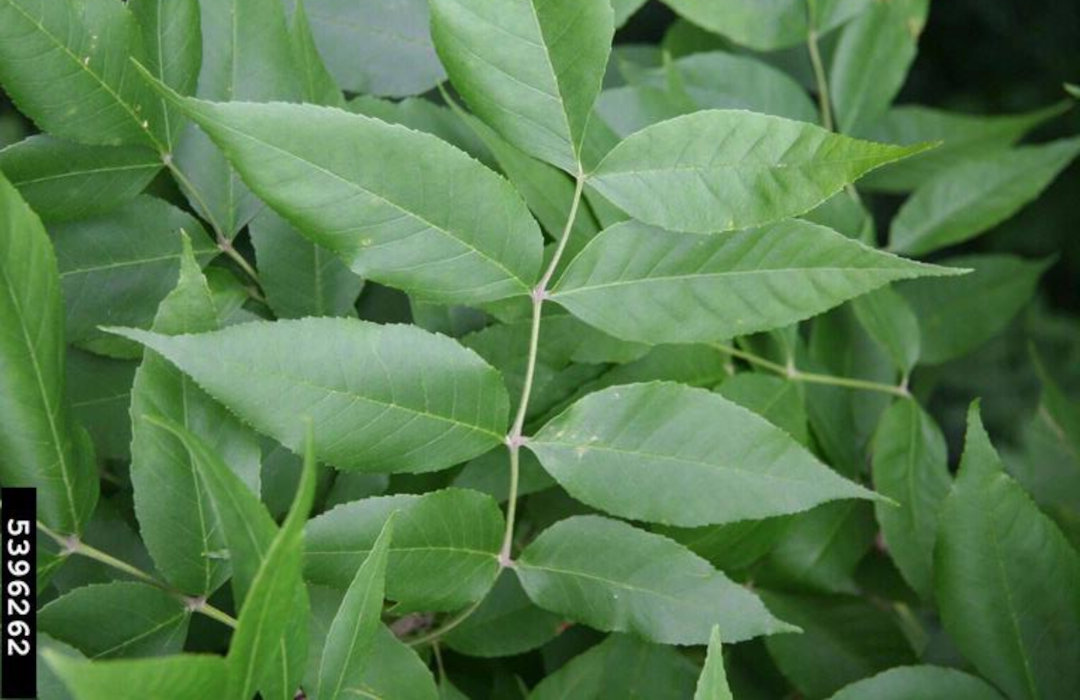
Ash tree leaves
Image credit: Robert Vidéki, Doronicum Kft., Bugwood.org
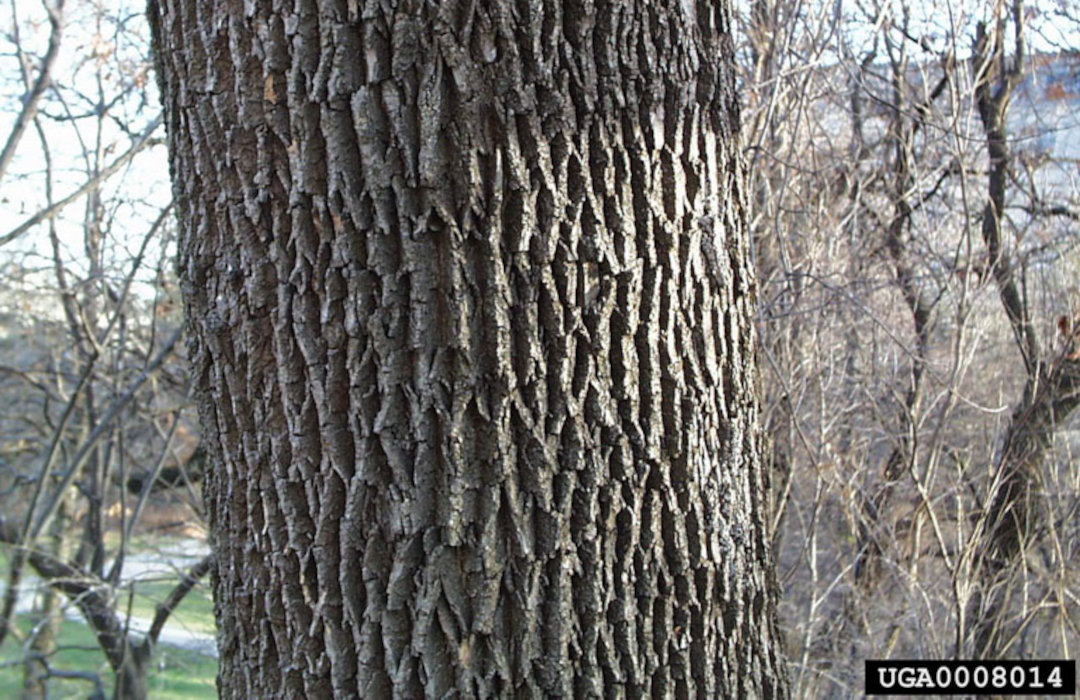
Ash tree bark
Image credit: Paul Wray, Iowa State University, Bugwood.org
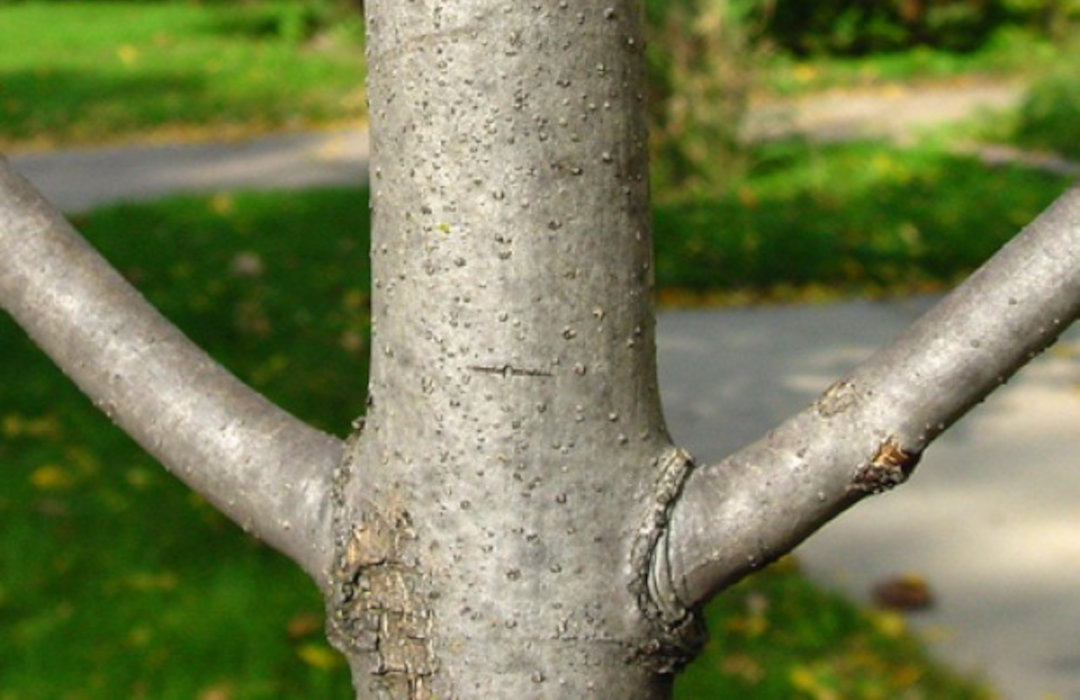
Ash tree opposite branching
Image credit: City of Aurora, Colorado

Ash tree shape and trunk style
Image credit: David Cappaert, Bugwood.org
Identifying emerald ash borer
EAB can be identified in both its adult and larval stages:
- Adults are slender and elongated beetles, measuring approximately ½ inch long and ⅛ inch wide, with a metallic emerald green exterior and a coppery-red underside. They are active during the summer months and leave behind distinctive D-shaped exit holes in the bark as they emerge.
- Larvae are cream-colored and feature distinctive bell-shaped body segments; when fully developed, they can grow up to 1½ inches long and create winding, S-shaped feeding galleries beneath the bark.
For help distinguishing EAB from similar species, see comparison guides from Colorado State University and Oregon State University.
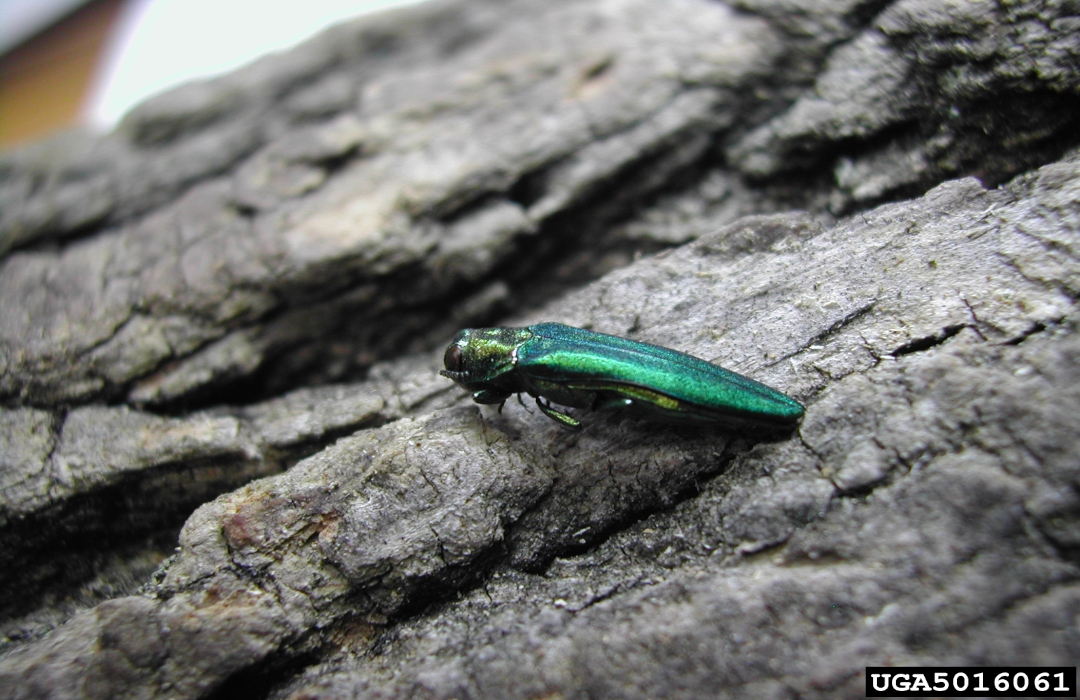
Adult emerald ash borer
Image credit: Pennsylvania Department of Conservation and Natural Resources, Bugwood.org

Larva of emerald ash borer
Image credit: David Cappaert, Bugwood.org
Symptoms of infestation
Early detection is critical. Look for these signs, especially in combination:
- Canopy dieback: progressive thinning or death of branches, typically starting at the crown and moving downward.
- S- or serpentine-shaped markings: present under bark, caused by larvae moving and feeding. Galleries are filled with frass, or larval excrement.
- Epicormic shoots: unusual sprouting from the trunk or base, often a stress response.
- Bark splitting: vertical cracks may form as the tree attempts to grow tissue around larval galleries.
- D-shaped exit holes: characteristic marks lest by emerging adult beetles
- Increased woodpecker activity: birds feeding on larvae beneath the bark may indicate infestation.
Note: These symptoms can resemble those caused by other pests or diseases. Multiple signs together are more indicative of EAB.
See Colorado State University and Oregon State University resources for diagnostic photos and further guidance.
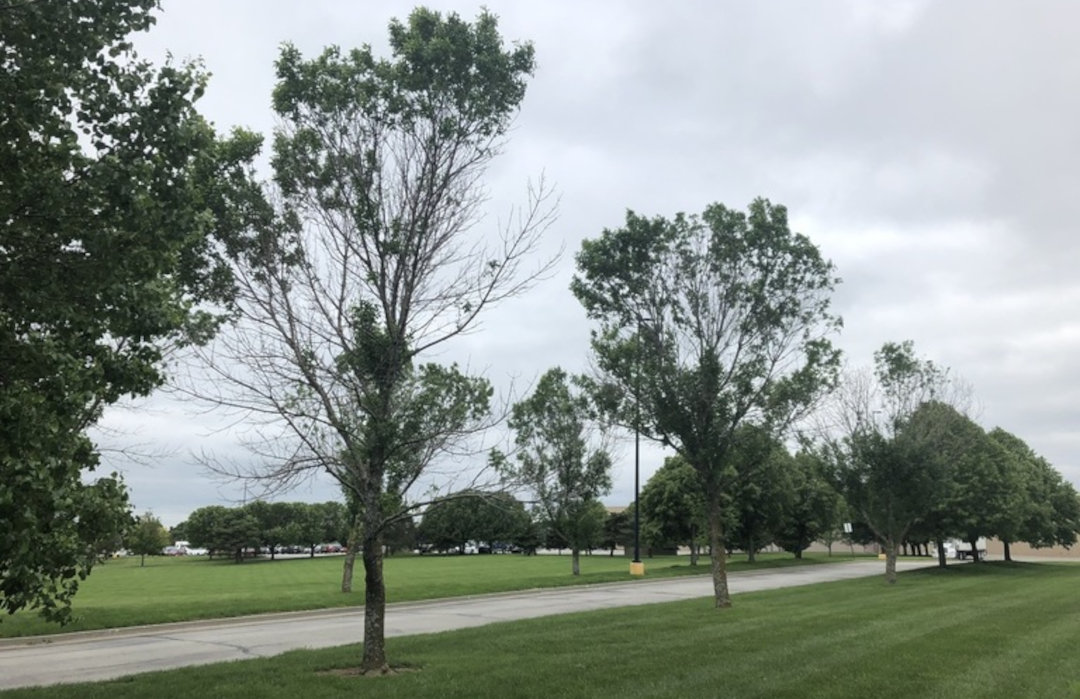
Ash trees with canopy thinning
Image credit: Ryan Armbrust, Kansas Forest Service, Bugwood.org
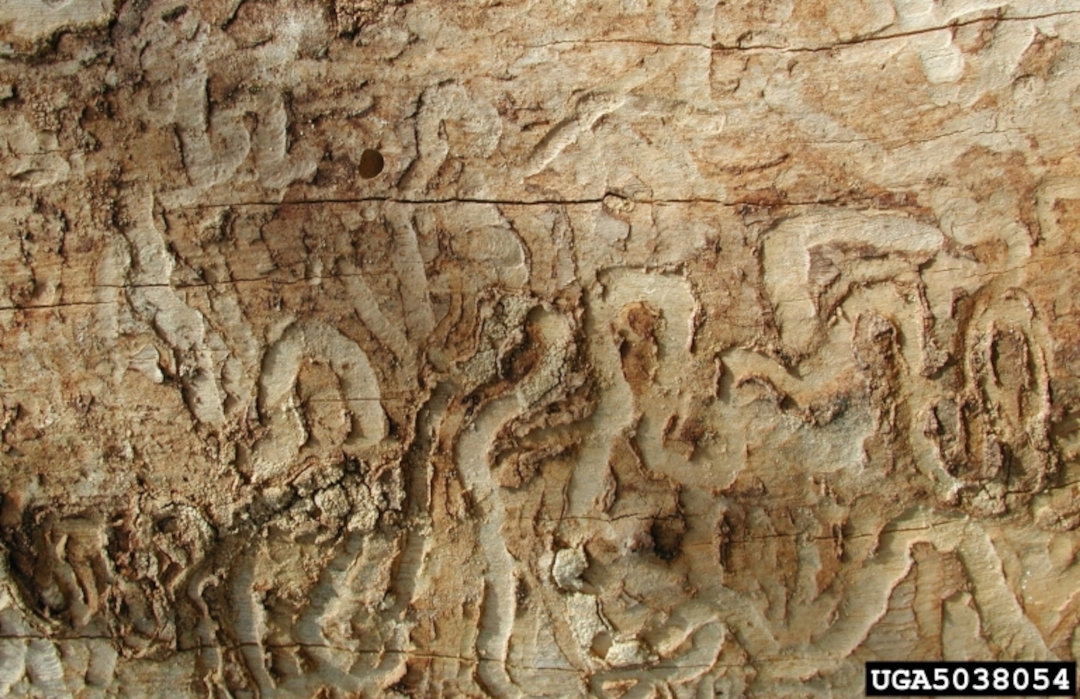
S- or serpentine-shaped markings under ash tree bark
Image credit: Joseph OBrien, USDA Forest Service, Bugwood.org
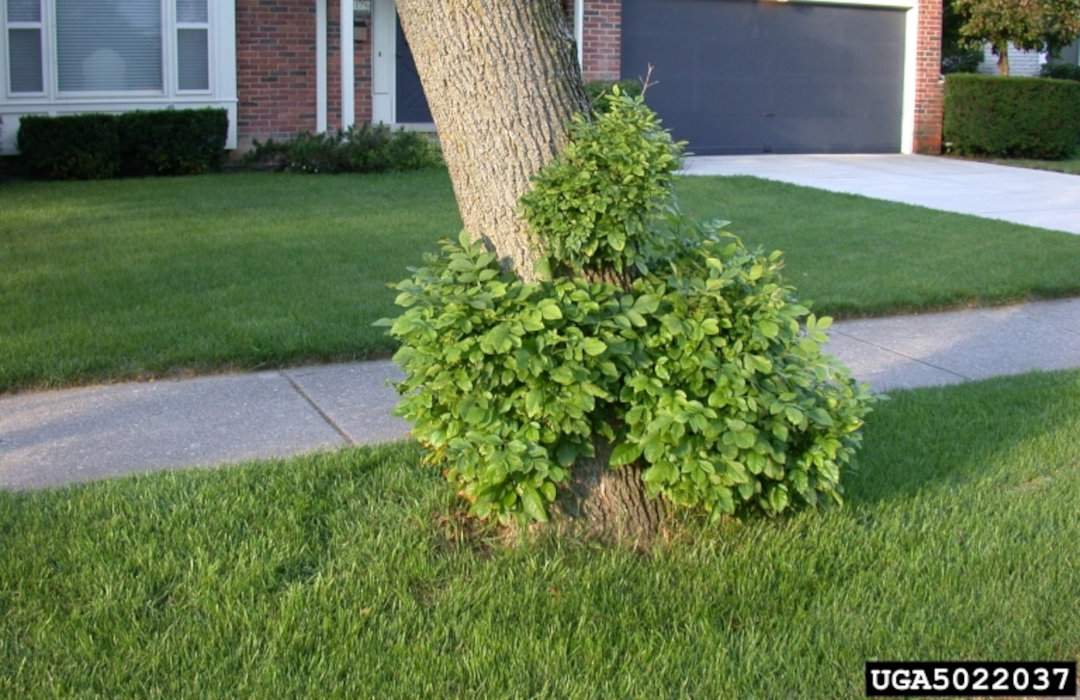
Epicormic shoots emerging from ash tree trunk
Image credit: Pennsylvania Department of Conservation and Natural Resources – Forestry , Bugwood.org
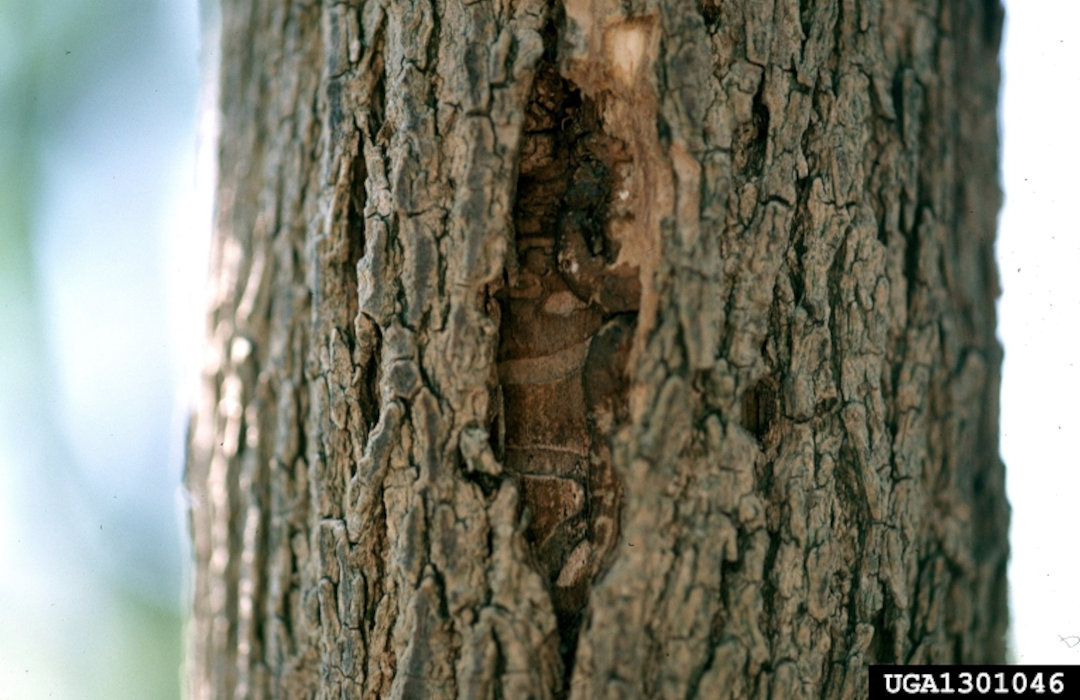
Bark splitting on ash tree
Image credit: Joseph OBrien, USDA Forest Service, Bugwood.org
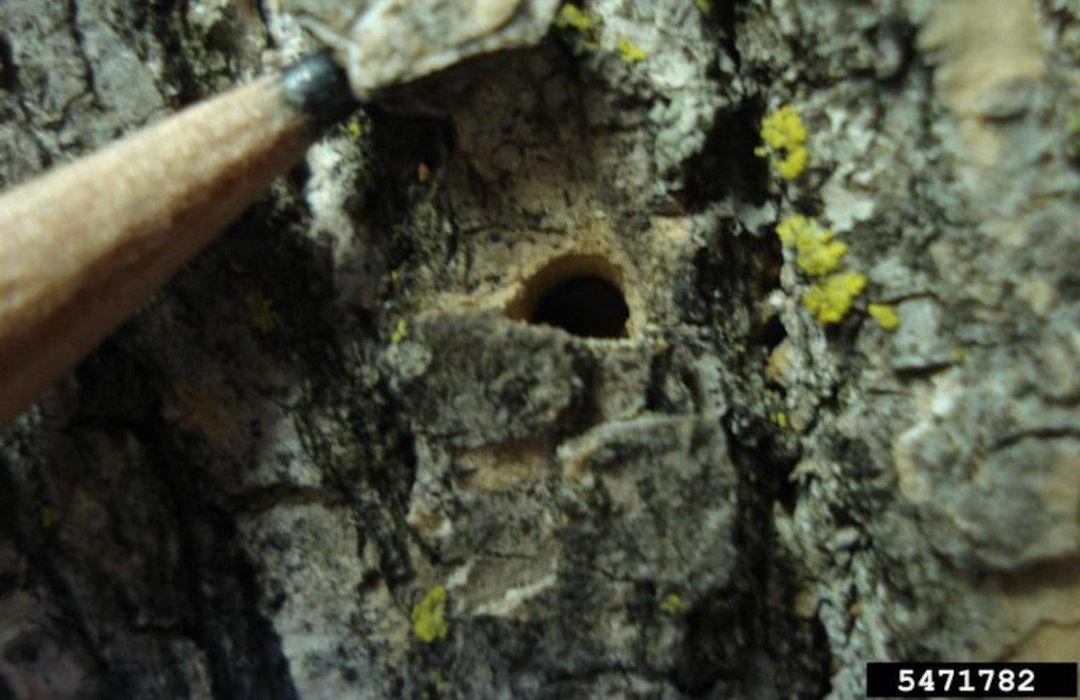
D-shaped adult exit hole with pencil for scale
Image credit: Kenneth R. Law, USDA APHIS PPQ, Bugwood.org
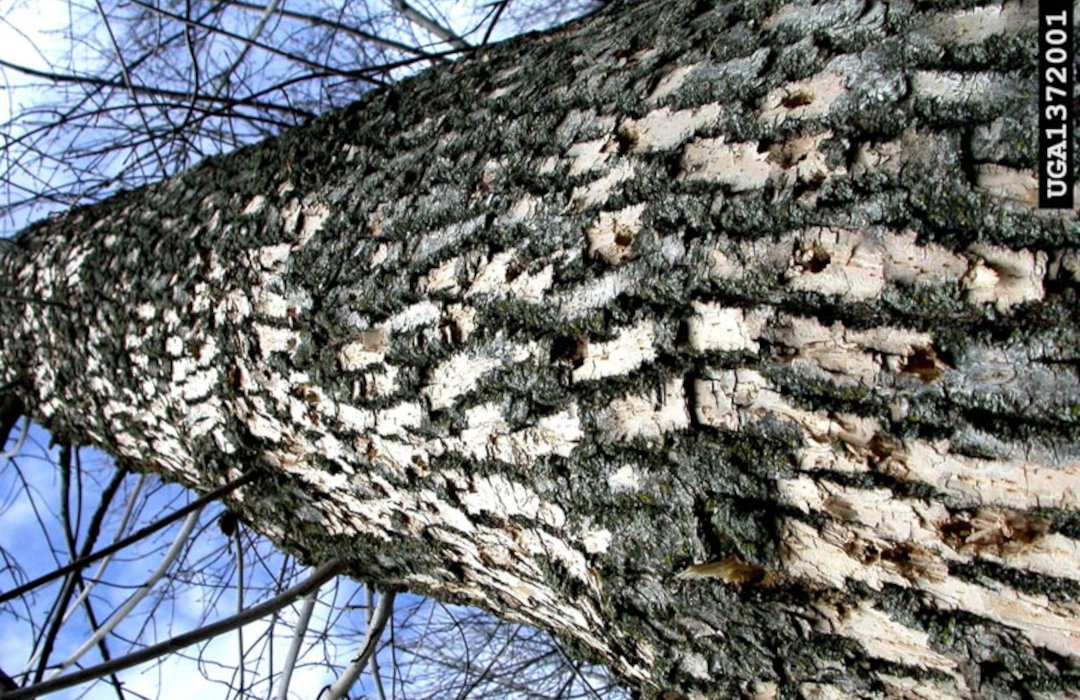
Ash tree with woodpecker flecking
Image credit: David Cappaert, Bugwood.org
What to do if you suspect emerald ash borer
Step 1: Confirm identification
Before taking action, make sure the tree in question is an ash and that symptoms match those of EAB.
Use identification guides for ash trees and EAB feeding injuries from Colorado State University and invasive species information from Oregon State University.
Refer to the symptoms listed in the How to identify emerald ash borer and symptoms of infestation section for visual and behavioral clues.
Step 2: Report the infestation
If you suspect EAB, report it to the appropriate agency in your state:
Colorado
Contact your local CSU Extension office, city or county division of forestry, or the Colorado State Forest Service (CSFS).
Oregon
Report sightings to the Invasive Species Hotline.
Montana
Reach out to your local extension agent, the Schutter Diagnostic Lab at Montana State University, or the Montana Department of Agriculture.
Utah
Contact the Utah Plant Pest Diagnostic Lab or the Insect and Pest Program at the Utah Department of Agriculture and Food.
Wyoming
Notify your local county extension office or the Wyoming Department of Agriculture. You may also submit detection information to USDA-APHIS.
Step 3: Take action
Once EAB is confirmed, consult a professional to determine the best course of action:
Hire an ISA-certified arborist to assess the tree and recommend treatment or removal.
Avoid do-it-yourself removal, especially for large or heavily infested trees—this can be dangerous. Note that canopy dieback of 30% or more means that a tree is no longer safe for an arborist to climb for removal.
If removal is necessary, dispose of wood properly. Shred wood into chips smaller than 1 inch to prevent EAB survival and follow local disposal guidelines to avoid spreading the pest.
Helpful Tools
Boulder County Decision Guide for treatment vs. removal
Oregon State University Guide to Hiring Pest Control Companies
Your local extension office can assist with planning and referrals: Colorado, Oregon, Montana, Utah, Wyoming
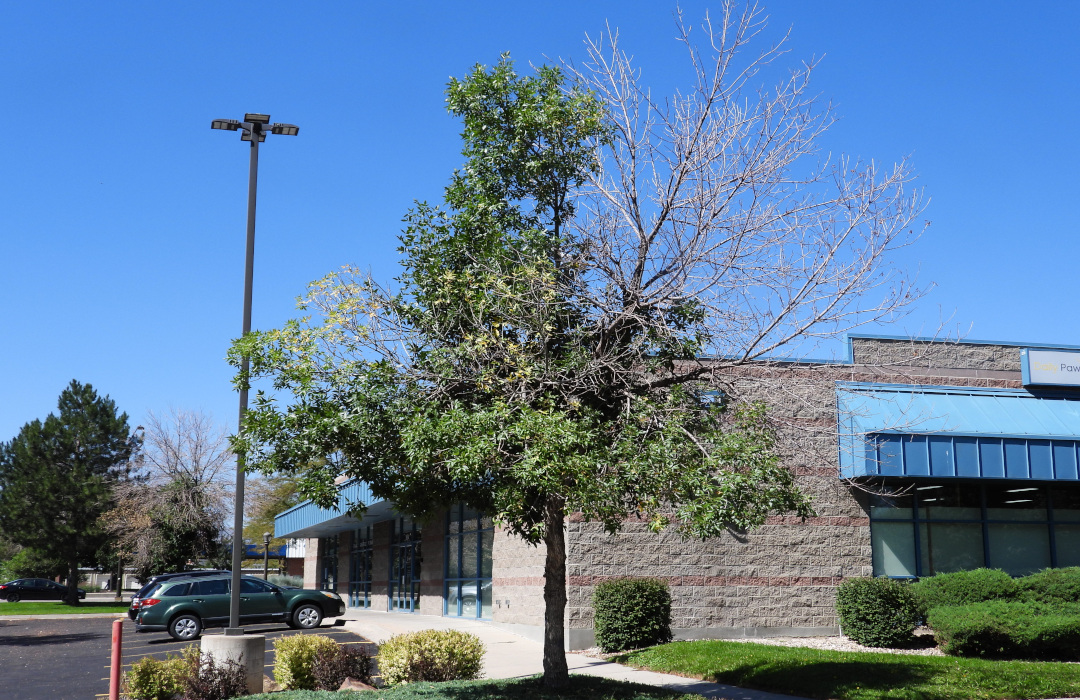
Ash tree with upper canopy dieback
Image credit: Ada Szczepaniec, Colorado State University
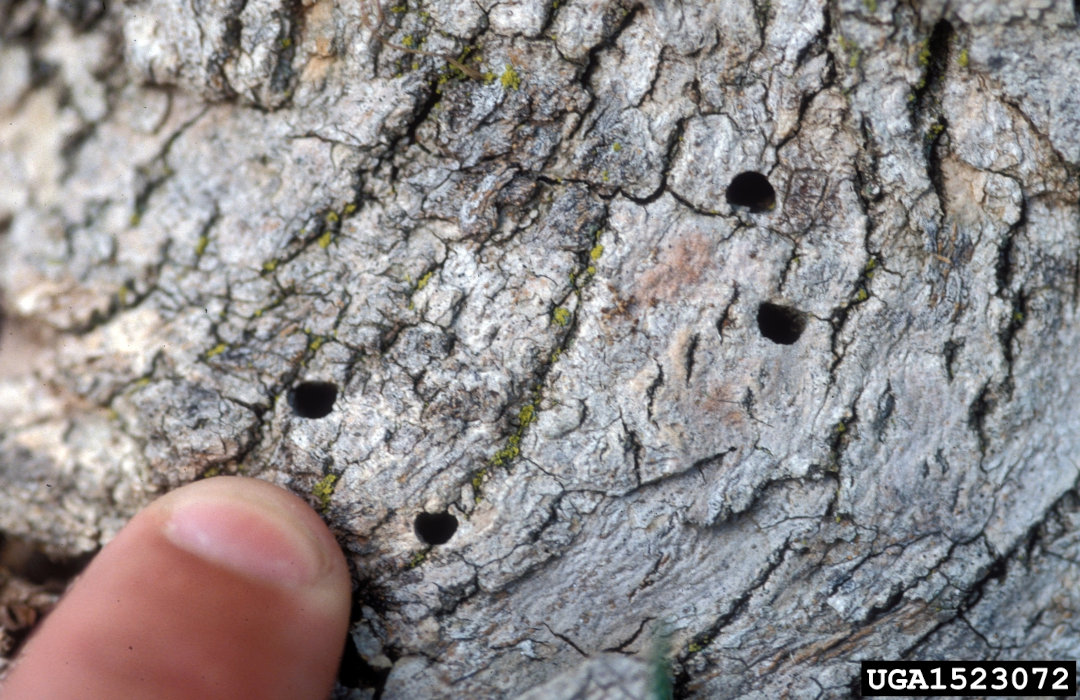
D-shaped exit holes
Image credit: Daniel Herms, The Ohio State University, Bugwood.org

Ash tree with serpentine galleries caused by EAB larvae
Image credit: Edward Czerwinski, Ontario Ministry of Natural Resources, Bugwood.org
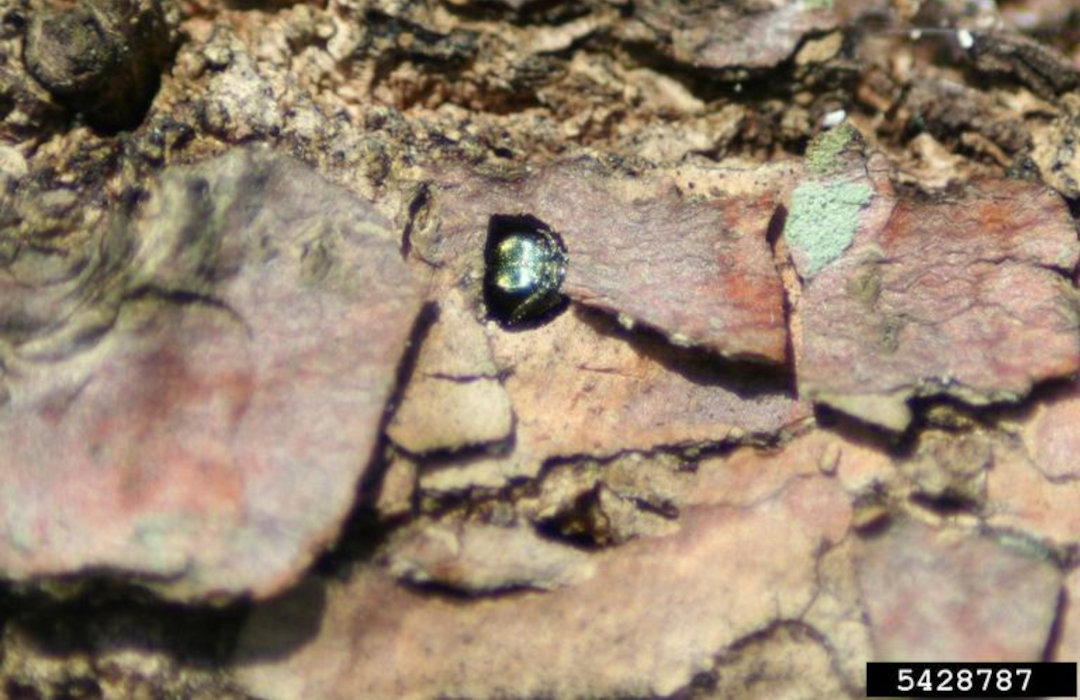
EAB adult emerging from tree
Image credit: Jared Spokowsky, Indiana Department of Natural Resources, Bugwood.org
Management and treatment options
Homeowner recommendations
EAB is present in parts of the western U.S., making regular monitoring and proactive care essential. Here’s how you can protect your ash trees:
Monitor trees
- Identify ash trees on your property using guides from Colorado State University and Oregon State University.
- Inspect regularly for signs of an emerald ash borer infestation: canopy dieback, epicormic shoots, D-shaped exit holes, serpentine galleries, and woodpecker activity.
Prevent spread
- Never move firewood from infested areas. Buy firewood locally at your destination.
- Diversify your landscape with a mix of tree species to improve resilience.
Stay informed by following local updates and resources:
Colorado: Denver Extension, City of Fort Collins, Colorado State Forest Service, Boulder County
Oregon: Solve Pest Problems, Emerald ash borer in Oregon, Oregon Invasive Species Council, City of Portland
Montana: Urban IPM EAB site, Montana EAB Field Guide
Utah: Utah State University Extension
Wyoming: Cheyenne Urban Forestry, University of Wyoming
Treatment strategies
Insecticide information
Before applying any insecticide, consult an ISA-certified arborist to assess your tree’s health and determine the most effective and safe treatment plan.
Multiple studies, including long-term research from Michigan State University (Bick et al. 2017 and McCullough et al. 2018), have shown that emamectin benzoate, applied via trunk injection, is the most effective insecticide for controlling emerald ash borer. It significantly reduces larvae and exit holes, with protection lasting up to 2–3 years, even in high-pressure infestations.
Dinotefuran, applied via basal trunk spray, is moderately effective and acts quickly due to its high solubility and fast translocation. Imidacloprid, typically applied as a soil drench, is less effective—especially for larger trees (over 30 cm DBH) or in areas with many untreated ash trees. Even high-dose applications may result in up to 30% canopy loss.
Azadirachtin, a botanical insecticide, may be useful in low-density infestations. It disrupts egg viability in older females and eventually kills larvae, though its effects are slower and less consistent.
Neonicotinoids like imidacloprid are easier and more cost-effective to apply, particularly as soil drenches, but their performance is inconsistent—especially for larger trees over 30 cm in diameter at breast height (Smitley et al. 2010). High-dose applications may offer some protection, yet many treated trees still experience up to 30% canopy loss (Smitley et al. 2015). Treatment success is highest when initiated early, repeated at recommended intervals, and when surrounding ash trees are also treated to reduce reinfestation pressure.
Work with professionals
Managing EAB requires specialized knowledge and equipment. Do not attempt to treat or remove infested trees on your own.
- Hire an ISA-certified arborist to assess tree health and recommend a treatment or removal plan.
- If removal is necessary, ensure wood is shredded into chips smaller than 1 inch to prevent EAB survival.
- Consider removing young ash trees if you prefer not to oversee a long-term treatment plan.
Resources like Boulder County’s decision guide and considerations for hiring a contractor can help you make informed choices.
Why management matters
Tree health and safety: EAB disrupts water and nutrient flow, leading to tree death and potential hazards from falling limbs.
Environmental impact: Ash trees provide shade and habitat. Their loss affects local ecosystems and urban canopy cover.
Economic costs: Treating or removing infested trees can be expensive for homeowners and municipalities.
Preventing spread: Timely management helps protect neighboring trees and public green spaces from infestation.
Resources and support
Reporting EAB by state
Colorado
Contact your local Colorado State University extension office, your city or county division of forestry, or the Colorado State Forest Service.
Oregon
Report the finding to the Invasive Species Hotline.
Montana
If you suspect EAB on your property or have a suspected EAB insect sample, contact your local extension agent, the Schutter Diagnostic Lab at Montana State University, or the Montana Department of Agriculture.
Utah
If you suspect EAB in Utah, contact the https://extension.usu.edu/pests/uppdl/index or the Insect and Pest Program at the Utah Department of Agriculture and Food.
Wyoming and other states
Submit detection information to USDA-APHIS.
Western IPM outreach and implementation grant collaborators
Access shared resources via the WIPM EAB Outreach Folder.
Helpful websites
Be a Smart Ash – Denver Parks & Rec
Guidelines for hiring a contractor
Recommended publications
Insecticide options for protecting ash trees from EAB
Urban ash management and EAB: facts, myths, and operational synthesis
Resources for WIPM outreach and implementation grant collaborators
If you’re part of our EAB outreach and implementation grant team, you can access our shared folder with resources here.
Helpful websites
Be a Smart Ash: Denver Parks and Rec
10 years with emerald ash borer in Boulder, Colorado
Guidelines for hiring a contractor
Publications
Insecticide options for protecting ash trees from emerald ash borer
Urban ash management and emerald ash borer: facts, myths, and an operational synthesis
Need Insect Identification Help?
We offer agricultural insect identification services through our Plant Diagnostic Clinic and laboratory. We now charge a $15 identification fee. Please visit the Plant Clinic for sample submission instructions.