


The RAISE Lab
Responding to Agricultural Issues with Science and Engagement (RAISE)
The RAISE Lab in the Department of Agricultural and Resource Economics at Colorado State University integrates research, teaching, and outreach to advance agricultural production systems and strengthen crop and livestock value chains. Through engaged partnerships and translational science, the lab addresses emerging topics in farm and ranch management, agricultural business and finance, production practices and technology, resource use and conservation, and related markets and policies. In doing so, it bridges CSU’s expertise in agricultural economics, complimentary academic disciplines, and outreach/extension with real-world challenges faced by stakeholders. The RAISE Lab is directed by Dr. Daniel Mooney.
Research Reports and Papers
Water Conservation on Grass Pastures in the Upper Colorado River Basin is Critical but Complex: Here’s What it Will Take
Assessing the Potential for Limited Irrigation Practices to Contribute to Livestock Profitability and Water Conservation in the Upper Colorado River Basin
Publications
Agricultural Water Management
“Agricultural Producer Decision Making Around Water Conservation in the Upper Colorado River Basin.” 2024. Choices, forthcoming. (D.F. Mooney, K.H. Hansen) (Open Access)
“Comparative Profitability of Irrigated Cropping Activities for Temporary Water Transfers under Risk Aversion.” 2023. Journal of Agricultural & Resource Economics 48(1): 202–218. (D.F. Mooney, T. Kelley*) (Open Access)
“More Risk, More Money: When are Payments for Water Savings from Limited Irrigation Profitable for Farmers?” 2022. Water Resources and Economics 40: 100212. (D.F. Mooney, D. Hoag, Z. Rasul*, S. Gao*) (Open Access)
Livestock Supply Chains
“Climate and Consolidation in the U.S. Beef Cow Sector.” 2024. Journal of Agricultural & Resource Economics, 50(1): 97-118. (N. Delay, D.F. Mooney, J. Ritten) (Open Access)
“Beef Cattle Producer Perspectives on Virtual Fencing.” 2024. Rangeland Ecology and Management, 96:143-151. (D. Hoag, A. Vorster, K. Ehlert, P. Evangelista, L. Edwards-Callaway, D. Mooney, J. Virene) (Open Access)
“The Economic Fundamentals of Virtual Fencing Compared to Traditional Fencing.” 2024. Rangelands, forthcoming. (D. Hoag, R. Reuter, D. Mooney, J. Vitale, N. DeLay, P. Evangelista, A. Vorster)
“Type and Frequency of Wild Pig-Domestic Livestock Contacts and Operator Concern for Disease Spread.” 2023. Q Open, 3:1-21 (S. McKee, D.F. Mooney, R. Williams) (Open Access)
“Willingness to Rent Land for Rotational Grazing: The Importance of Survey Response Behavior.” 2018. Journal of Agricultural and Applied Economics 51(1): 1–22. (D.F. Mooney, C. Bolison, B. Barham) (Open access)
Cropping Systems
“Estimating the ex ante adoption determinants of novel cropping systems with nonpecuniary benefits.” 2023. Journal of the Agricultural and Applied Economics Association, (D.F. Mooney, B.L. Barham) (Open Access)
“Hemp Farming and Credit Access in the United States: Developing a Conceptual Framework for Future Research.” 2024. Journal of Agribusiness, forthcoming. (B.P. Mallika Appuhamilage, D. Mooney, T. Mark)
“Producers Marketing a Novel Crop: A Field-Level View of Hemp Market Channels.” 2023. Renewable Agriculture and Food Systems 38: e32. (R. Hill, B. Jablonski, L. Van*, M. Wang*, P. Appuhamilage, M. LeRoux, T. Mark, D.F. Mooney, D. Thilmany) (Open Access)
“Making Headway on the Hemp Industry in Colorado: The CHAMP Initiative.” 2020. Western Economics Forum 18(2): 86–94. (R. Hill, D.F. Mooney, D. Thilmany) (Open access)
The RAISE Team

Principal Investigator
Daniel Mooney
Associate Professor
Department of Agricultural and Resource Economics
Colorado State University
Graduate Research Assistants
Undergraduate Research Assistants
Nicollette Marty
Kai Siep
Casey Walters
Collaborators
Dana Hoag, Professor
Agricultural and Resource Economics

Perry Cabot, Extension Professor
Western Colorado Research Center
States Ranches
Jose Chavez, Professor
Civil and Environmental Engineering

Seth Mason, Principal
Lotic Hydrological

Mike Higuera, Agricultural Operations Manager
Western State Ranches
Classes
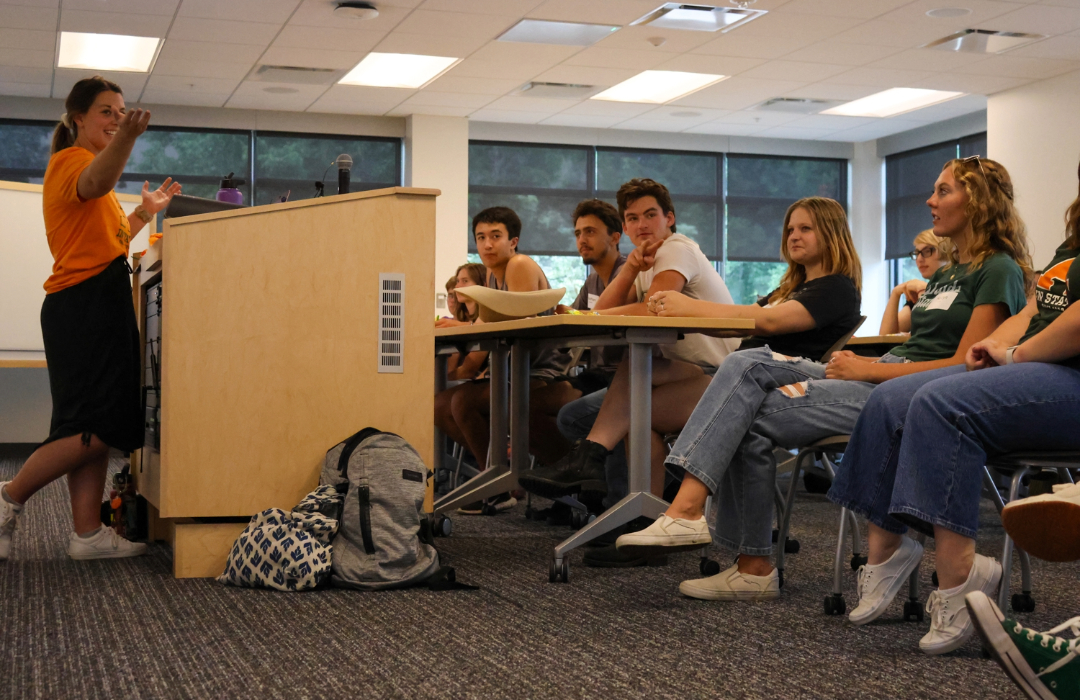
AREC 305 – Agricultural and Resource Enterprise Analysis
Learn more about AREC 305
This is a 3-credit methods course for the DARE undergraduate Agribusiness major. It is a high-contact course, meeting for 200 minutes/week of face-to-face instruction (two 50-minute lectures and one 100-minute computer lab class). The high-contact aspect is enjoyable because it offers the opportunity to learn students’ names, interests, and aspirations. The course content covers record-keeping, financial analysis, and budgeting methods. The lab component requires students to learn Excel, develop spreadsheet models, and solve and communicate case problems. It also serves students in other majors pursuing or considering a DARE minor. As a result, it attracts students from various disciplines. Many students pursuing DARE’s Environmental and Resource Economics major, Food System Economics major, and related campus interdisciplinary minor programs (sustainable agriculture, resource conservation, climate challenges, etc.) also enroll in this class.
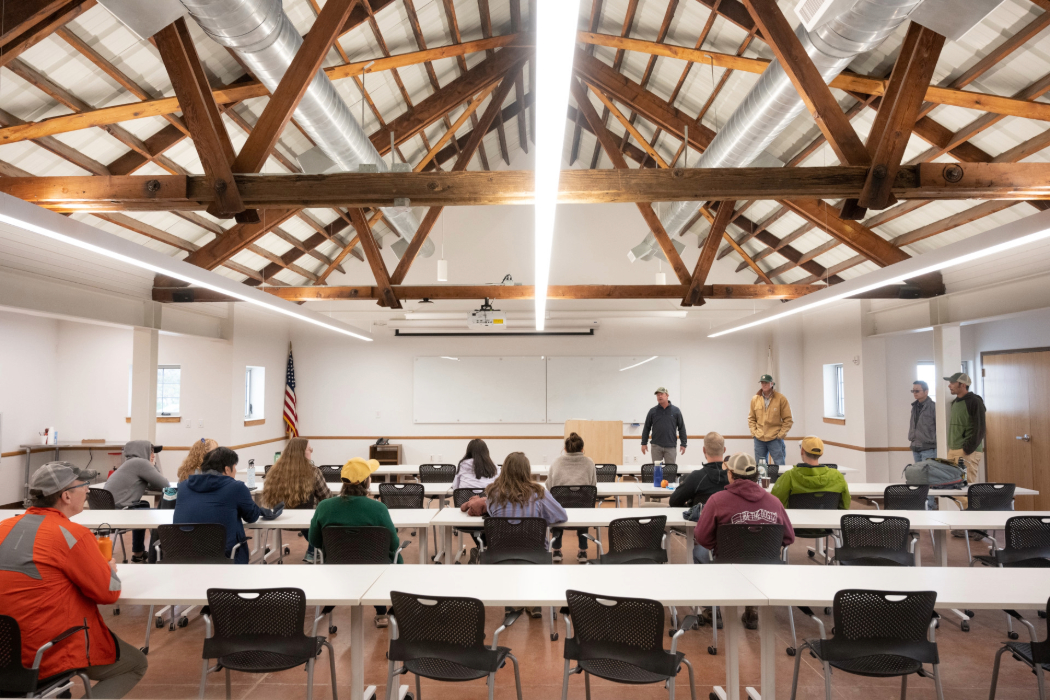
AREC 605 – Agricultural Production and Cost Analysis
Learn more about AREC 605
This is a team-taught 3-credit graduate course that is required for M.S. and Ph.D. students in DARE’s agricultural and food economics field. The prerequisites are M.S. micro-theory and M.S. econometrics. The CSU course catalog describes the objective as “Empirical application and analysis of production and cost issues in the agricultural and natural resource sectors.” To accomplish the objective, I blend lectures and readings on the theoretical foundations of this field with hands-on, data-driven examples and assignments. I also have students complete, interpret, and visualize the results of empirical activities and present applied empirical papers to the class to reinforce critical concepts and build their skillsets as holistic researchers.
News

Winter pea research indicates diverse potential benefits
Published by The Collegian 21st of October 2024

Water shortages. But is it worth the cost?
Published by Water Education Colorado 3rd of October 2024

Growing peas helps the Colorado River
Published by CSU Source 7th of March 2024

Are low-water crops a realistic way to cut back on Colorado water use?
Published by the Colorado Sun 24th of April 2024
Regional Development Economics Research
Our work in rural development starts at the community level and expands to regional and international scales. We investigate several agricultural and resource allocation specific to Colorado, including land use, tax policy, resource valuation, fiscal impact analysis, industry analysis, and labor market issues. Our international experience involves projects in East Asia, Latin America and the Caribbean, Central Europe, Africa, and the Middle East.
Research Facilities and Partnerships
- CSU Regional Economic Development Institute
- Colorado Department of Agriculture
- Colorado Office of Economic Development and International Trade
- Colorado Department of Local Affairs
- Downtown Colorado Inc.
- Economic Development Corp of Colorado
- USDA Rural Development Regional Offices
Agricultural Education
Our Agricultural Education research focuses on effective teaching methods and metrics and how to increase and improve agricultural literacy. We study teaching strategies to generate improved learning outcomes from Extension programming, agriculture classrooms, and first-year college experiences. At the k-12 level, we investigate ways to introduce agriculture in the classroom and how to most effectively provide innovative agricultural literacy badging programs.
Research Facilities and Partnerships
- CoBank Center for Agricultural Education
- Cams Ag Academy at CSU Spur
- Morgridge Learning Lab at CSU Spur
- National Western Stock Show
- Colorado Future Farmers of America
- National FFA
- AmeriCorps
- Colorado Community College System