


Food Innovation Center
Supporting food and beverage entrepreneurs | Connecting with your consumers | Bringing your ideas to life |
Welcome to the Food Innovation Center!
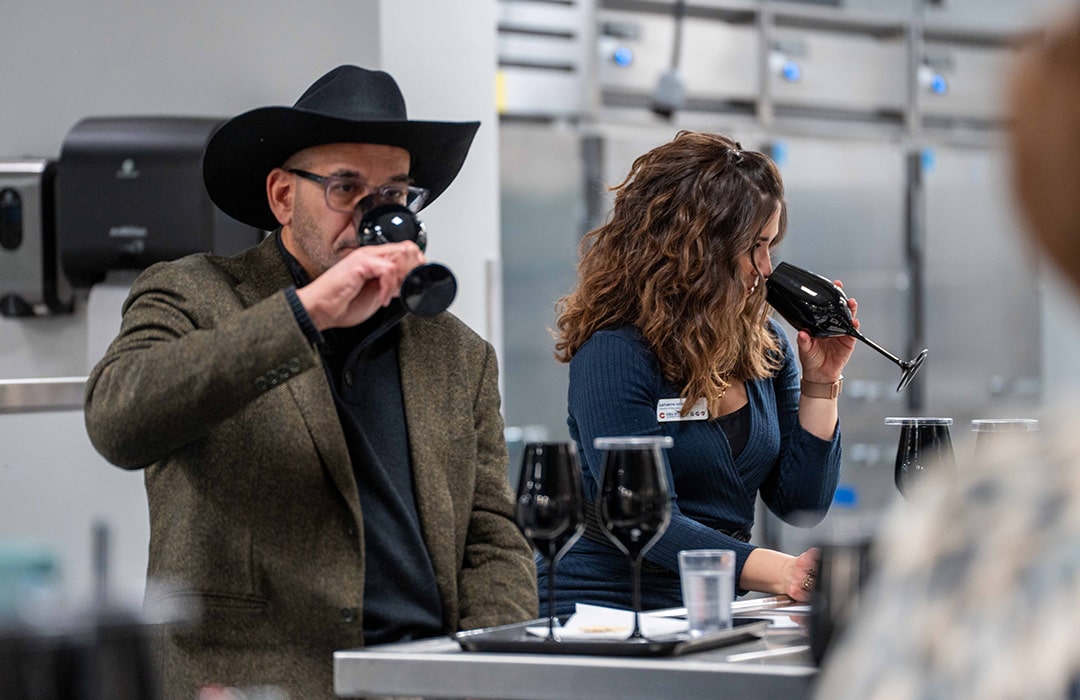
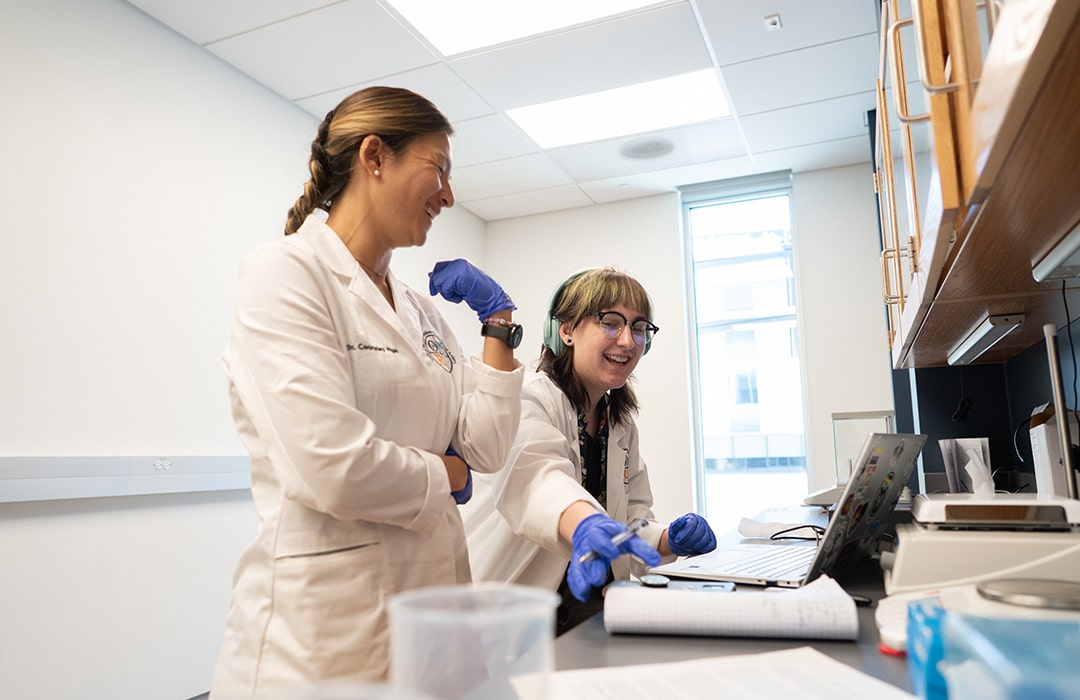
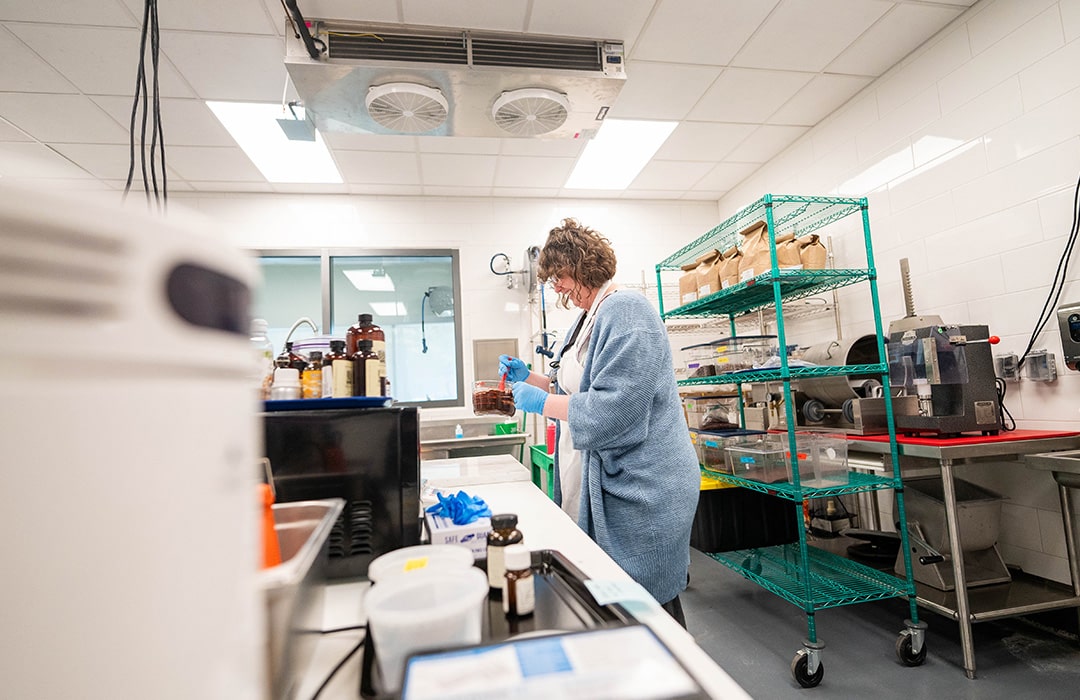
The CSU Spur Food Innovation Center supports entrepreneurs at every stage — from startups launching their first product to large multinational food companies. The Food Innovation Center’s state-of-the-art Denver facility houses a large commercial kitchen, dairy lab, produce lab, and tasting facilities.
Our team of skilled food scientists can help with all your technical needs including:
- Product development & formulation
- Food Analysis Testing
- Process Authority Letters
- Nutrition Facts Panels
- Sensory & consumer testing
- Co-development sessions
Which Path Is Right for You?
There are two ways to start a project with the Food Innovation Center — choose the one that fits your situation:
PATH A — I know exactly what tests or analysis I need
Head to our Request Services page, download the appropriate intake form(s) for your project, fill them out, and submit. Each service has its own form — you may submit more than one at a time.
Step 1: Download your forms
Visit our Request Services page and download all applicable Service Request Forms. Each service requires its own form — do not combine multiple services or multiple SKUs into a single form.
Step 2: Fill Out Your Form(s) Completely
Each service requires its own submission form. Follow instructions within each form as they may vary across request type.
Step 3: Submit Online & Await Follow-Up
Use the “Submit Service Request Forms” button on our Request Services page (highlighted in the screenshot below). You may submit more than one form at a time. Provide as much detail as possible in your request. A member of our team will follow up within 5–7 business days of your completed submission.
Optional: Non-Disclosure Agreement (NDA)
We do not require an NDA, but if you’d prefer one to be in place before we begin work, submit it along with your service request forms. NDAs take a minimum of two weeks to process — we can begin working on your project concurrently while the NDA is reviewed.
PATH B — I’m exploring product development and need guidance
Use our Contact the FIC form. Select “Product Development” from the dropdown and describe your project in as much detail as possible — include all your needs and areas of interest.
Product Development Inquiries
If you’re at an early stage and not sure what you need, use our Contact the FIC page. Select “Product Development” from the “I am interested in” dropdown, then describe your project in the text box with as much detail as possible— provide any and all support documentation you have.
Food Innovation Center Services

Work With the FIC
Pay Your FIC Invoices
Estimated Turnaround Times
Timelines below apply once we have all necessary materials from you to begin the project:
| Service | Estimated Turnaround |
|---|---|
| Nutrition Facts Panel (NFP) — Initial | 14 business days |
| NFP Update (minor formula changes) | 7 business days |
| Food Analysis (pH, brix, gluten, water activity) | 7 business days |
| Process Authority Letters | 14 business days |
| Product Development Projects (MVP) | 6–8 months (product dependent) |
Product development timelines vary based on product complexity and scope. Your project lead will provide a specific estimate once your inquiry is reviewed.
Get to Know Us


Caitlin Clark
Food Scientist
caitlin.clark@colostate.edu

Martha Calvert
Sensory Manager
martha.calvert@colostate.edu


Rachel Sears
Program Coordinator
rachel.sears@colostate.edu

Michael Beck
Dairy Lab Manager
michael.beck@colostate.edu

Daniel Kim
Food Technologist
Danielbada.Kim@colostate.edu
Contact the FIC
Contact the FIC:
Email: foodinnovation@colostate.edu
Address:
4780 National Western Dr
Terra Building, Denver, CO 80216
Frequently Asked Questions
Click the linked text below to navigate to that service’s FAQs.
Food Analysis | Nutrition Facts Panel | Process Authority Letters | Product Development | Shelf-Life Testing | Sensory & Consumer Testing
Food Analysis Frequently Asked Questions
Is an NDA required to perform Food Analysis?
It is not required and usually not needed, since we don’t require any information about your formula or process. However, we will sign one if you request it.
Can you tell me what type of testing I should do?
We can suggest which tests your inspector or regulatory authority is likely to require based on our previous experience with similar products. However, only your regulatory authority can tell you which specific tests they require in your specific case.
If you test my product, can you guarantee that it will be safe to eat?
Only your inspector or regulatory authority can make that determination. We can tell you, based on our experience, what the regulatory authorities are likely to tell you based on the test results. But ultimately all we can do is perform the tests and give you the results. When you present the results to the regulatory authority, that person will determine if the food is safe or not.
Nutrition Facts Panel Frequently Asked Questions
Is an NDA required to get a Nutrition Facts Panel?
It is not required, but many people prefer to execute an NDA, so we are happy to do so if you prefer.
Is a Nutrition Facts Panel always required?
It is not required in some cases, for example some very small businesses or some selling under the Cottage Foods Act. However, it is never a bad idea to use one, even if it is not required.
What are the advantages and disadvantages of producing an NFP through chemical nutrient analysis rather than by calculation from a database?
Chemical nutrient analysis of foods costs about 10x the price of producing an NFP from a database. Here are some examples of situations where it might be worth the extra cost to perform a chemical analysis:
- You are using a novel ingredient about which no database material or scientific literature exists, and for which there is no widely accepted nutritional equivalent
- You are a producer who grows or manufactures one or more of your ingredients yourself (a farm growing a unique type of vegetable, a flour mill making a specialty flour blend)
- You want to make a claim on your label about a minor nutrient which the FDA does not require to appear on the label and which therefore may not have been included on your supplier’s spec sheets
I want to have my NFP produced through chemical analysis instead of by calculation from a database. Can you do it this way instead?
No, CSU Spur does not perform chemical nutrient analysis, but here are some labs that can:
Which nutrients does the FDA require to appear on a Nutrition Facts Panel?
The most recent updates to NFP requirements were released in 2016. Since this update, required nutrients have included:
- Calories
- Total Fat
- Saturated Fats
- Trans Fats
- Cholesterol
- Sodium
- Total Carbohydrates
- Dietary Fiber
- Total Sugars
- Added Sugars
- Protein
- Vitamin D
- Calcium
- Iron
- Potassium
Vitamins A and C were previously required, but are no longer required as of the 2016 update
What is the advantage in having you create my NFP rather than creating it myself on a site like Recipal?
Often making NFPs involves the laborious process of entering data from spec sheets—many consumers value not having to do that themselves and would rather pay us to do it! Also, some specialty ingredients require background research to make accurate estimates of nutrient content. Additionally, some ingredients, recipes, or processes are more complex than others, and it may be necessary to calculate oil uptake, salinity change, water loss, nutrient degradation, etc. Finally, we can help you be compliant in terms of your serving sizes, formatting, and label claims. Recipal (or similar) is a great service, but it can be wildly inaccurate if it isn’t used properly. If people are not comfortable using it properly, that is when they come to us.
Can you change the fonts, colors, and size of my NFP so it looks better on my packaging?
We will produce the NFP of the overalls size and specific font size and formatting that is required for your packaging size. All NFPs we produce will be black text on a white background using Helvetica font. The FDA does allow some other text and color options in some cases. If you or your graphic designer choose to alter the NFP we produce in any way, it is your responsibility to ensure that your changes are compliant with FDA regulations. Use the links in the Resources section below to find specific regulations.
Do you provide graphic design services?
No. If you need one, you can hire a private graphic designer or hire an Arts student from CSU or CU Denver, which is often cheaper. Use this website to post a job to CU Denver Arts and Media students and use this website to post a job to CSU students (not department-specific).
Process Authority Letters Frequently Asked Questions
Is an NDA required to get a Process Authority Letter?
It is not required, but many people prefer to execute an NDA, so we are happy to do so if you prefer.
What type of products require a Process Authority Letter?
Per federal canned food regulations 21 CFR Part 113, 21 CFR Part 114, and 9 CFR Part 431, all hermetically sealed acidified foods (a finished equilibrium pH of 4.6 or below and a water activity above 0.85) and low-acid canned foods (a finished equilibrium pH above 4.6 and a water activity above 0.85) are required to have a thermal (cooking) process established by a recognized Process Authority, usually in the form of a Process Authority Letter.
What is an Exemption Letter?
This is a letter provided to a product using a novel or emerging preservation technology stating specifically that a Process Authority has reviewed the data and found it to be exempt from the requirement to file a Scheduled Process as well as from associated obligations, such as attending Better Process Control School.
When is a Process Authority Letter NOT required?
If a canned food has a pH below 4.6 and has no significant proportion of any low-acid ingredient, or if a canned food has a water activity less than 0.85 (too dry to support pathogenic bacteria), then by regulation no Process Authority letter is required.
Why has my co-packer asked me to get a Process Authority Letter even though my product does not fall into one of the above categories?
It is common for co-packers to make this a requirement even for foods not required to file a scheduled process by the FDA, because it reduced their legal liability.
What are the advantages to having a Process Authority Letter on file even if regulations don’t require it?
It is hard to determine the regulatory status for certain products, and a process authority letter provides expert, independent documentation for the appropriate regulatory category which is helpful for inspectors and auditors to know which records to examine. It also helps the producer be sure they have the correct logs and records on file. This can avoid mistakes that lead to recalls, non-compliance, or liability concerns. Also, all producers who are not exempt from the Food Safety Modernization Act (FSMA) and who use thermal processes to control potential food safety hazards are required to have validation documents for those thermal processes per the Preventive Controls for Human Foods rule. Having the product and process validated by a Process Authority is one way to obtain this validation.
Can I perform my own safety testing (such as pH, Brix, or water activity) at home with equipment I own, and submit those results to get my Process Authority Letter?
No. Safety testing must be carried out by a third-party lab using calibrated equipment and standardized testing methods. If we don’t test your product ourselves, then results must be submitted to us in the form of a report from another lab, on that lab’s official letterhead.
Product Development Frequently Asked Questions
What type of clients do you normally work with?
We support entrepreneurs at every stage — from startups launching their first product to large multinational food companies (both domestic and international). The Food Innovation’s state-of-the-art Denver facility houses a large commercial kitchen, dairy lab, produce lab, and tasting facilities.
If I work with you, will I have a market-ready product at the end of the process?
At the end of your contract with us, you will have what is called a Minimum Viable Product. This refers to a formula that works well at a small scale and has been concept-tested, but which may still require adjustment as you scale up. Scaling up often means making adjustments to your suppliers, equipment, and workflow. All of these factors may require that you adapt your formula slightly to accommodate small differences.
What is the right stage in my business development process to use your product development services?
Before you work with us to do product formulation, it is generally best that you have carried out some kind of market survey and that you have considered your short- and long-term goals for your product, including how much you might be willing to invest. You should not have yet committed to final packaging, or to a co-packer.
Can you help me find a co-packer?
Generally, we work with clients who aim to self-produce and don’t move on to co-packing directly after working with us. For that reason, while we have contacts to some local co-packers and a few in other states, we do not have extensive contacts with co-packers. We can provide a few recommendations and resources where you can search for co-packers. However ultimately, finding a co-packer will be your responsibility when you decide to take that step.
Can you help me find ingredient suppliers?
When developing your product, we will aim to do it with your scale in mind. This often means using suppliers who sell in bulk or wholesale where possible. Our network of supplier connections expands every day, and so we can usually provide recommendations for suppliers of your ingredients. However, we don’t guarantee this, as some formulas require specialty or custom ingredients, and also because we are not able to negotiate pricing or other arrangements with suppliers on your behalf.
Can you help me figure out my costs?
Because we are not the final purchaser of ingredients, suppliers will not negotiate pricing with us. Often, we are unable to know the cost of ingredients. For this reason, it falls to you to find out the costs of all your materials. However, once you have gathered this information, we can coach you on how to use it to calculate your cost of goods sold (COGS) and your Unit COGs as part of our consulting services.
Shelf-Life Testing Frequently Asked Questions
Why perform shelf-life testing?
Shelf-life testing determines how long a food product can be sold before its quality declines, affecting its taste, smell, and appearance. This information is crucial for food producers to guarantee their product remains fresh and enjoyable until consumed. Customers look for shelf-life information when buying food, and grocery stores need it to ensure the product fits into their logistics and remains sellable for a set period.
When is the right time in my product development to perform shelf-life testing?
Perform shelf-life testing after you’ve settled on your recipe and packaging. Since the formula, production, and packaging can impact shelf-life, test when these elements are unlikely to change. If you later change any component, like an ingredient or packaging, retest to ensure the shelf-life is still accurate for the new version of your product.
Is a separate shelf-life test required for each SKU in my product line?
Yes, with a few exceptions. Usually, each SKU contains different ingredients or is made with different formulas, and different formulas can cause shelf-life to vary significantly. Therefore, each SKU in your lineup should be tested separately.
How does shelf-life testing work?
After consultation with a food scientist, you’ll determine the right number of samples to send us. The product is then stored under pre-determined conditions depending on the type of testing. At set times, a team of food scientists evaluates the sensory qualities of an aged sample against a fresh or preserved control sample and tracks various chemical and organoleptic attributes over time.
Do these prices include safety and microbiological tests?
The quoted prices cover safety tests like pH and water activity at each test interval where necessary, though not all products require these tests. They are included at no extra cost when needed, Microbiological testing is not currently a service we offer at CSU Spur. If you require challenge testing or any other type of microbiological analysis, we refer you to the following labs who can perform this service:
- Microbac
- Eurofins
- Alliance Analytical
- Midwest Laboratories
- Murray Brown laboratories
- Medallion labs
- RL Food Testing Laboratorie
What are the testing options, and which option should I choose?
- Real-time shelf-life testing (RTSLT) monitors how long your product stays good under the product’s normal storage conditions, and the time required for the test is the same as the product’s shelf-life. This testing is often used for refrigerated and frozen goods but is also suitable for some shelf-stable products that are not candidates for Accelerated testing.
- Accelerated shelf-life testing (ASLT) uses high temperatures to speed up chemical reactions associated with aging. Typically, one to two weeks in accelerated conditions equals one month of normal aging. Food scientists apply a formula to predict the product’s actual shelf-life under normal storage. ASLT can be used for many types of shelf-stable foods.
- Combined ASLT/RTSLT Testing offers the best mix of fast and reliable shelf-life data. If you start both tests at the asme time, you can get rapid turnaround on an estimate of shelf-life with ASLT without losing time on RTSLT, which will eventually provide are more accurate shelf-life measurement. This type of combined testing is ideal for products with an estimated shelf-life of over two years or more. And, since there’s an overlap in testing procedures and timing, we offer a discounted rate for the combined service.
- Abuse Testing measures how resilient a product is to mishandling or poor storage. For example, ice cream is repeatedly thawed for serving and then refrozen to store again. How many freeze-thaw cycles can it withstand before the taste, texture, or appearance deteriorates? Abuse testing is crucial to determining recommended package size and consumer handling instructions.
Will I be charged for tests that are not carried out if my product does not survive for its full expected shelf-life?
No. You will only be charged for the testing intervals that we actually test the product. If the product fails before its expected shelf-life, and we have samples left over that were not tested, you will not be charged for these untested intervals. The price that I quote you is the maximum price if the product survives its entire projected shelf-life. If you are charged a different amount, it will always be less than this quoted price, in the event that the product fails earlier.
Sensory & Consumer Testing Frequently Asked Questions
What does it mean to be a sensory panelist?
The word “panelist” refers to any individual that participates in a sensory study, or taste-test. Being a sensory panelist means that you get to try lots of different foods and beverages and share your opinions.
Are all taste-tests paid?
No! Taste tests are often organized for one of two reasons: (1) for a food or beverage company, or (2) for research. Sometimes, if we urgently need certain people for a study, then we will pay our participants. Other times, the budget of running a test is tight. In this case, we will not provide an incentive; but your feedback is still important.
Where do taste-tests take place?
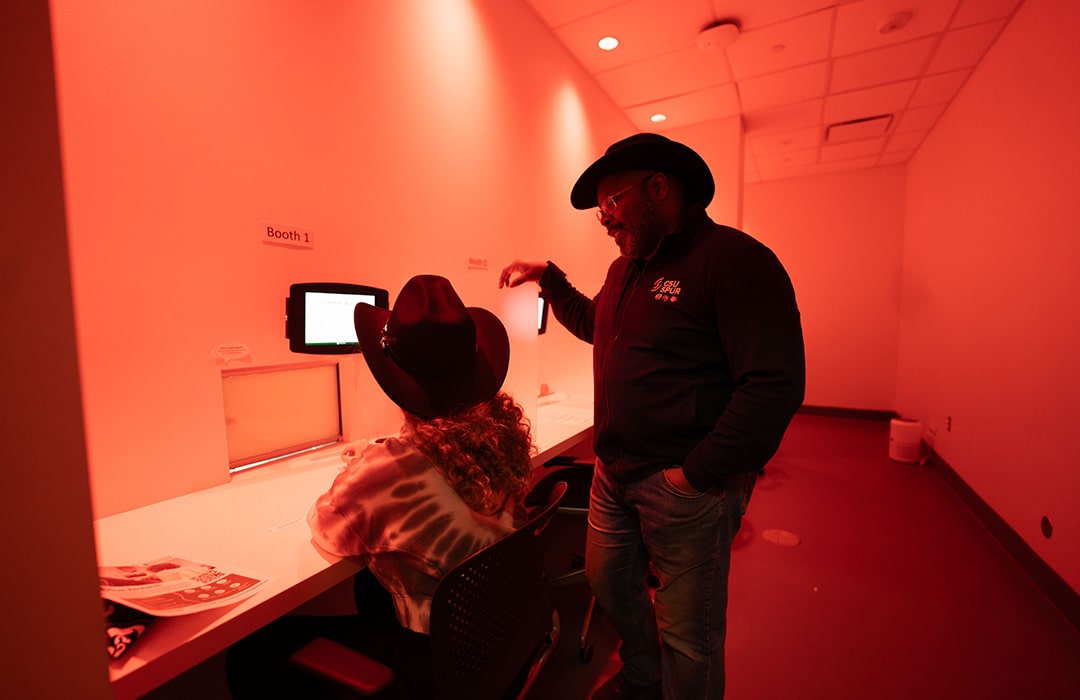
Most taste testing takes place in the Spur Sensory Lab, which is on the first floor of Terra at the bottom of the staircase. Sometimes, our studies can take place in other parts of the building, in which case we will provide specific instructions and have signage placed in the building to help you find your way.
Do I need training to be a taste-tester?
No! Almost all studies do not require any training. But, fun fact: you can be a trained taste-tester if you want! We have a special group of dedicated sensory panelists that meet once a week to train their palate on a variety of products and sensations. If you have a flexible schedule and are interested in joining us, email us at CSUSpurSensory@colostate.edu.
What ages are you looking for?
We are looking for all ages! It makes the most sense to have an adult over 18 years of age to sign up for our database. However, we run studies with people of diverse ages, including kids and toddlers. Recruitment emails that we send out will always include information about age restrictions, so be on the lookout.
Is this a job?
No. Taste-testing is like volunteering and is a type of active learning. Usually, payment for sensory studies is minimal and sporadic, so it is not a form of stable income.
Why Spur?
Spur is not an acronym; it is a mission. Our mission is to spur the success of food and beverage producers and growers in the Mountain West region and beyond. Being based in Denver, we most often engage with better-for-you and sustainable brands, those working with fermentation, and novel methods in processing, packaging, and consumer science.
Spur also provides a host of unique opportunities for collaboration and engagement being located right in the heart of the RiNo district of downtown Denver and in close proximity to Denver International Airport.
As an agriculture experimentation site within Colorado State University’s College of Agricultural Sciences – Spur is the face of innovation.